
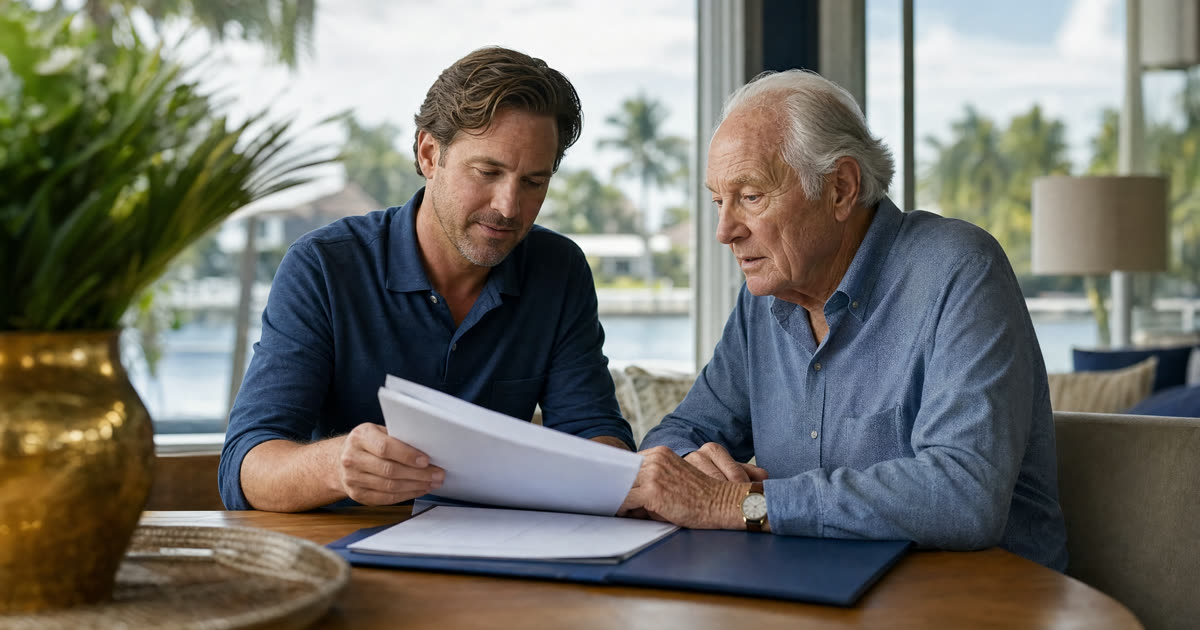
Why Nursing Home Costs Are Forcing More Families to Look at Medicaid
In my practice, the conversation about Medicaid almost always starts the same way: a family calls after a parent has had a fall, a stroke, or a diagnosis that makes it clear they can no longer live safely at home. By then, everyone is trying to understand nursing home costs, insurance, and government benefits all at once, usually under a lot of stress.
Florida nursing home care commonly runs in the range of roughly $9,300 to $10,600 a month for a semi-private room, and costs can run higher depending on the facility and level of care needed. The state recently finalized its October 2026 Medicaid reimbursement rate for nursing homes at an average of about $302.92 per resident day, a slight decrease from the 2025 rate. For a family paying privately, that translates to a very real monthly bill that can quickly outpace savings, which is exactly why Florida's Institutional Care Program (ICP) Medicaid benefit exists: to help pay for nursing home care once someone meets the program's medical and financial requirements.
The good news is that Florida Medicaid planning is a well-established area of law. Families do not have to spend down every asset in a panic. There are legitimate, well-recognized tools built into the rules themselves.
Have this exact situation? Talk it through with a Florida attorney — the 20-minute consultation is free.
Book Free Consult or call (888) 388-8445What Are Florida's 2026 Medicaid Income and Asset Limits?
For a single applicant seeking nursing home Medicaid in 2026, the general rule of thumb is:
- Income limit: around $2,982 per month for the applicant
- Asset limit: $2,000 in countable assets for the applicant
- Personal needs allowance: $160 per month, which the resident keeps for personal expenses even after Medicaid is paying for care
Not everything counts as an asset. A primary home (up to certain equity limits), one vehicle, prepaid burial arrangements, and certain retirement accounts in payout status are generally treated as non-countable, meaning they do not have to be spent down before Medicaid eligibility is possible.
When only one spouse needs nursing home care, Florida law protects the spouse who remains at home through the Community Spouse Resource Allowance. In 2026, the at-home spouse is generally allowed to keep up to roughly $162,660 in countable assets, on top of the applicant spouse's $2,000 limit. This spousal protection is one of the most important, and most underused, tools in Florida elder law. Many families do not realize how much can legally be preserved for the healthy spouse.
If an applicant's income is above the cap but they still qualify on assets, a Qualified Income Trust, sometimes called a Miller Trust, can be used to redirect excess income so it does not disqualify them. This is a common and accepted planning tool, not a loophole.
The Five-Year Lookback: Why Timing Matters
This is the part of Medicaid planning that causes the most anxiety, and understandably so. When someone applies for long-term care Medicaid in Florida, the Department of Children and Families reviews the previous 60 months (five years) of financial records to see whether the applicant gave away money or property for less than fair value.
This is why last-minute gifting to children or grandchildren, or transferring a home outright without proper planning, can backfire badly if it happens too close to when care is needed. It is also why I tell clients that Medicaid planning is far more effective when it starts years before a crisis, not during one.
Importantly, guardianship of a loved one does not erase or excuse transfers that happened before the lookback review. A court-appointed guardian still has to account for how assets moved during that five-year window when a Medicaid application is filed.
Guardianship and Long-Term Care Planning
When a loved one can no longer manage their own financial or medical decisions, and there is no valid durable power of attorney or healthcare surrogate designation in place, a Florida court may need to appoint a guardian to act on their behalf. Guardianship is a court-supervised process, and it can be necessary and appropriate in the right circumstances, but it is generally more time-consuming, more public, and more expensive than having planning documents already in place.
This is one of the clearest, most practical reasons I encourage Florida families, especially adult children of aging parents, to put a durable power of attorney (Florida Statutes Chapter 709), a healthcare surrogate designation, and a living will in place well before a health crisis. These documents allow a trusted person to step in immediately, without going to court, and they also make later Medicaid planning much smoother because there is already a legally authorized person who can execute trusts, transfers, or applications on the applicant's behalf.
Building an Asset Protection Plan Before You Need One
Common planning strategies I discuss with Florida clients include irrevocable trusts structured to hold assets outside the five-year countable window once enough time has passed, Medicaid-compliant annuities that convert countable assets into an income stream for a spouse, irrevocable funeral and burial trusts (which are non-countable), and careful use of the homestead exemption alongside Florida's constitutional homestead protections. Every one of these tools has specific rules about timing, structure, and who benefits, and using them incorrectly can create the very penalty period a family is trying to avoid.
There is no single "right" plan for every family. A retired couple with a paid-off home and modest savings has very different options than a widow with significant investment accounts and multiple adult children. That is exactly why this area of law calls for individualized review rather than a generic checklist.
Frequently Asked Questions
The Truestead Takeaway
Florida's Medicaid rules for long-term care are detailed, but they are not designed to punish families who plan responsibly and in advance. Understanding the current income and asset limits, the five-year lookback and its penalty divisor, and the protections available to a healthy spouse can make an enormous difference in preserving a family's financial stability while still getting a loved one the care they need. Because every family's assets, income, and health situation are different, and because a poorly timed transfer can create months of ineligibility, this is an area where a short conversation with a Florida elder law attorney well before a crisis hits is almost always worth far more than trying to piece the rules together alone.
Sources
- Berg Bryant Elder Law Group, PLLC, "Florida Medicaid Income and Asset Limits for 2026," January 27, 2026
- Zoecklein Law, "Florida Medicaid Income Limits 2026: What Counts & What to Do," June 10, 2026
- Zoecklein Law, "Florida Medicaid 5-Year Lookback Rule," June 7, 2026
- Berg Bryant Elder Law Group, PLLC, "How Does the Florida Medicaid 5-Year Look-Back Period Work?," June 19, 2026
- Pease Bell, "Florida Finalizes October 2026 Medicaid Nursing Home Rates," September 3, 2026
- Nolo, "When Medicaid in Florida Will Pay for Nursing Home, Assisted Living, or Home Health Care," July 14, 2026
- AskMedicaidFlorida.com, "Important Changes to Florida Medicaid in 2026: What You Need to Know," February 1, 2026
Have a child turning 18? Get the free 18 & Protected packet — the legal documents every Florida 18-year-old needs.
Get the Free PacketTalk to a Florida Attorney
Every family’s situation is different. Schedule a consultation with Arthur Simpson, Esq. to review your plan and your options under Florida law.
Schedule a Consultation →This article is for general informational purposes only and does not constitute legal advice, nor does reading it create an attorney-client relationship. Florida estate, elder, probate, and real estate law are fact-specific and change over time. Consult a licensed Florida attorney about your individual circumstances. Arthur Simpson, Esq. is licensed to practice law in the State of Florida. Attorney advertising.
Talk to a Florida Attorney — Free 20-Minute Consultation
Pick a time below. No obligation, no pressure — just answers.