
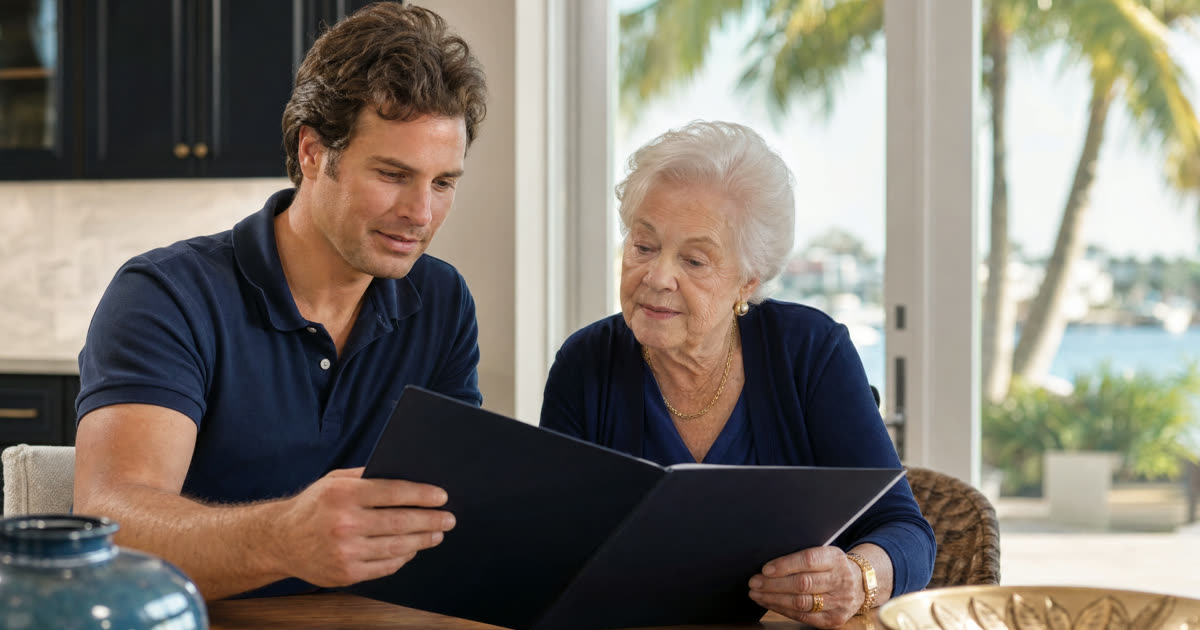
Who is Lourdes, and why did the facility mention CARES?
Lourdes is 84, living in Deltona, and two weeks into a rehabilitation stay after a fall. She has diabetes and some early memory loss, and her son Marco has been told the facility "will send CARES out" if the family wants to pursue nursing home Medicaid. Lourdes is a composite example I use to illustrate a common situation, not an actual client, but her story reflects what I see regularly in my practice.
Marco's confusion is understandable. Families usually know that Medicaid has financial rules (income, assets, the look back period), because that is what most of the planning conversation focuses on. What catches people off guard is that there is a separate medical gate, and it is not the facility, not the family doctor alone, and not the Department of Children and Families who decides whether Lourdes needs nursing facility level of care. That decision belongs to CARES.
Have this exact situation? Talk it through with a Florida attorney — the 20-minute consultation is free.
Book Free Consult or call (888) 388-8445What is CARES, and what does it actually do?
CARES stands for Comprehensive Assessment and Review for Long-Term Care Services. It is a program operated by the Florida Department of Elder Affairs, working alongside the Agency for Health Care Administration, and it exists specifically to determine whether a person's medical and functional condition meets the standard for nursing facility level of care under Medicaid.
CARES assessors are registered nurses or other qualified professionals who work out of field offices located around the state. Their job is not to approve or deny the Medicaid application itself, that is the Department of Children and Families' role through the ACCESS system on the financial side. CARES answers a narrower, but essential, question: does this person's condition genuinely require the level of care a nursing facility provides, or could they be served safely in a less restrictive setting, such as at home with support or in an assisted living community?
This assessment is completed at no cost to the family. Nobody pays CARES directly, and the family does not need to hire anyone to "get CARES to come out." The facility, the hospital discharge planner, or the family can initiate a referral, often through an Aging and Disability Resource Center (ADRC), which is the local access point for long-term care services and information throughout Florida.
What does the CARES nurse look at when they assess someone like Lourdes?
The assessment is built around functional capacity, not just diagnosis. A CARES nurse evaluates Lourdes across several dimensions:
- Activities of daily living (ADLs): the ability to transfer from bed to chair, walk or move around, bathe, dress, eat, use the toilet, and maintain basic grooming.
- Cognition and memory: how well Lourdes can follow instructions, recognize safety risks, remember to take medication, and make decisions about her own care.
- Medication management: whether she can safely manage her diabetes medication and monitoring on her own, or whether she needs supervision or hands-on administration.
- Supervision needs: whether she could be left alone safely for periods of time, or whether a fall risk, wandering risk, or medical instability means she needs ongoing oversight.
- Behavioral and safety factors: anything that affects her ability to live independently or with limited support.
As a general matter, needing assistance with a meaningful number of these activities of daily living, combined with cognitive decline, tends to point toward a finding of nursing facility level of care. A diagnosis alone, such as early memory loss, is not automatically determinative. What matters is how that diagnosis translates into Lourdes's actual, day-to-day functional needs.
What is Form 3008, and why does the physician matter so much?
Alongside the CARES functional assessment, Florida requires a separate document called the Medical Certification for Medicaid Long-Term Care Services and Patient Transfer form, commonly referred to as Form 3008. This form is typically mailed out through the Aging and Disability Resource Center once an application or referral is underway.
Form 3008 must be completed by Lourdes's treating medical provider, which in Florida can be a licensed physician, an Advanced Practice Registered Nurse, or a Physician Assistant. The provider documents her diagnoses, her functional limitations, her medication regimen, and their clinical judgment about her need for skilled or supervised care.
For Marco, this means a second phone call matters almost as much as the CARES visit itself: making sure Lourdes's physician at the rehab facility, or her primary care doctor, actually receives, understands, and promptly completes Form 3008 with an accurate picture of her condition.
What happens if CARES decides Lourdes could be cared for at home?
This is one of the outcomes families fear most, and it does happen. CARES is directed to recommend the least restrictive appropriate setting. If the assessment concludes that Lourdes's needs could reasonably be met at home with services, or in an assisted living setting, rather than in a nursing facility, that finding affects her eligibility for nursing home Medicaid (the Institutional Care Program) specifically.
This is not necessarily the end of the road. Families in this position generally have options worth discussing with a Florida elder law attorney:
- Requesting a fair hearing through the Office of Appeal Hearings, where additional medical evidence and documentation can be presented.
- Asking the treating physician to submit updated or more detailed information if the original Form 3008 did not fully capture the person's condition.
- Exploring whether a Medicaid home and community based services program might be a better fit if the person's needs genuinely can be met outside a facility.
A denial of nursing facility level of care is a medical finding, and medical findings can sometimes be revisited when circumstances change or when the initial picture was incomplete.
How can Marco help make sure the assessment reflects reality?
Families often assume the CARES visit is something to simply wait for and hope goes well. In my experience, the families who get the most accurate outcome are the ones who prepare.
Here is what I would tell Marco to do before and during the CARES assessment:
- Keep a simple care log in the weeks leading up to the visit: how much help Lourdes needs getting out of bed, whether she has had further falls or near-falls, how often she forgets medications, how confused she becomes at different times of day.
- Be present for the assessment if at all possible, since a person experiencing cognitive decline may understate their own limitations out of pride or confusion, answering "I'm fine" to a nurse's question even when daily reality says otherwise.
- Loop in the physician early so Form 3008 does not sit untouched. A rehab stay creates natural urgency, but paperwork can still stall without a reminder.
- Share concrete examples, not just conclusions. Saying "she forgot to turn off the stove twice last month" tells the assessor more than saying "she has memory problems."
How does the medical side connect to the financial side of Lourdes's case?
Medicaid eligibility for nursing home care in Florida requires clearing two separate gates: the medical gate (CARES level of care determination) and the financial gate (income and asset rules handled through the Department of Children and Families' ACCESS system). Truestead has covered the financial side extensively elsewhere, including the income cap, the Qualified Income Trust, spend-down planning, and the look back period, so I will not repeat that ground here.
What matters for Marco right now is understanding that these two processes run in parallel, not in sequence. A family can be deep into financial planning and documentation while the CARES assessment and Form 3008 are still pending, and vice versa. Neither side alone determines eligibility. Lourdes needs both a favorable level of care finding and a financially compliant application to receive Institutional Care Program benefits.
Frequently Asked Questions
The Truestead Takeaway
Lourdes's situation is a reminder that qualifying for Florida nursing home Medicaid is not just about income and assets, it hinges on a separate medical determination made by CARES and supported by a physician's completed Form 3008. Families who understand this process, keep a clear record of daily care needs, and stay engaged with the treating physician tend to get a more accurate, and often more favorable, assessment. If your family is heading into this process, it is worth having a Florida elder law attorney review both the medical and financial tracks together so nothing falls through the gap between them.
Have a child turning 18? Get the free 18 & Protected packet — the legal documents every Florida 18-year-old needs.
Get the Free PacketTalk to a Florida Attorney
Every family’s situation is different. Schedule a consultation with Arthur Simpson, Esq. to review your plan and your options under Florida law.
Schedule a Consultation →This article is for general informational purposes only and does not constitute legal advice, nor does reading it create an attorney-client relationship. Florida estate, elder, probate, and real estate law are fact-specific and change over time. Consult a licensed Florida attorney about your individual circumstances. Arthur Simpson, Esq. is licensed to practice law in the State of Florida. Attorney advertising.
Talk to a Florida Attorney — Free 20-Minute Consultation
Pick a time below. No obligation, no pressure — just answers.