
Raymond's situation: is it really too late?
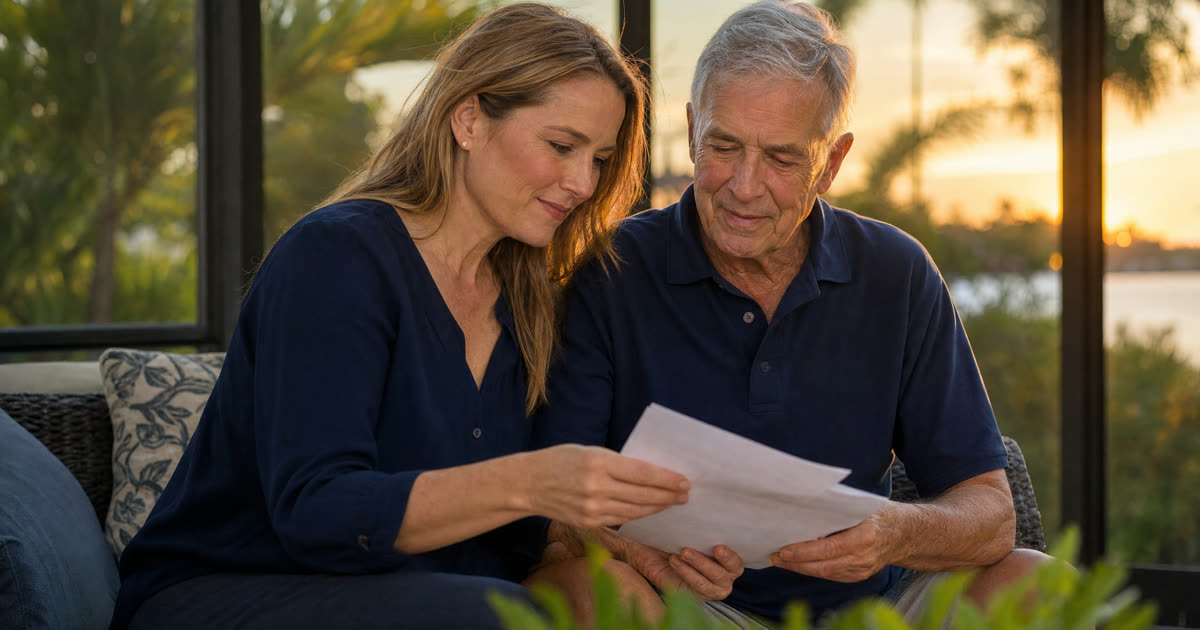
Raymond is 84, lives in Daytona Beach, and had a stroke last month that landed him in a skilled nursing facility. He is single, owns his home outright, and has $300,000 in savings. His daughter Tanya, who is helping manage things, was told by a well-meaning friend that the time for planning had already passed. I hear a version of this every month in my practice, and it is almost never true.
Raymond is a composite example, not an actual client, but his numbers reflect what I see constantly: a parent with real savings, a sudden medical crisis, and a family who assumes the only options are spending everything down or doing nothing at all. Neither is correct. What changes once someone is already in the facility is not whether planning is possible, but which tools apply and how quickly they need to move. A 90-day framework, broken into three phases, is how I walk families through it.
Have this exact situation? Talk it through with a Florida attorney — the 20-minute consultation is free.
Book Free Consult or call (888) 388-8445Days 1-30: documents, the asset snapshot, and exempt spending
The first month is about getting organized and stopping the bleeding, not about the final Medicaid application. For Raymond, this phase would include:
- Legal documents. If Raymond does not already have a durable power of attorney and, if appropriate, a healthcare surrogate, these need to be in place so Tanya can act on his behalf with the bank, the facility, and the state.
- An asset and income snapshot. Every account, the home, any life insurance with cash value, and Raymond's monthly income (Social Security, pension) get documented as of the date of admission. Florida Medicaid looks at what existed on specific dates, so precision here matters.
- Exempt purchases. Certain spending converts countable savings into non-countable assets without violating the five-year lookback. This can include prepaying funeral and burial arrangements through an irrevocable pre-need contract, paying down debt, or making necessary repairs to the home. These are legitimate, immediate ways to reduce the $300,000 figure honestly and productively.
None of this locks Raymond out of anything. It simply uses the first 30 days to spend money on things Raymond needs or wants anyway, rather than watching it drain straight to the nursing home's private-pay rate.
Days 31-60: the caregiver contract and the gift-and-annuity design
This is the phase where real protection happens, and it is also the most technical part of crisis planning. For a single applicant like Raymond, a Medicaid-compliant annuity by itself does not create eligibility, because Florida applies a $2,000 asset limit for a single individual and an annuity alone doesn't erase excess savings the way it can for a married couple with a spouse remaining at home. So single applicants generally need a different combination of tools, and the one most commonly used in Florida crisis planning is sometimes called the "half a loaf" strategy.
Here is the basic idea in plain terms: roughly half of the excess savings is gifted, often to Tanya or another family member. That gift intentionally creates a Medicaid penalty period, a stretch of months during which Raymond would not be eligible for benefits. The other half of the money is then used to purchase a Medicaid-compliant annuity, an irrevocable, non-assignable, actuarially sound contract that pays out in equal monthly installments back to Raymond, timed so the annuity income covers the nursing home bill precisely during the penalty period. If the timing and numbers are calculated correctly, the annuity runs out right as the penalty period ends, and Raymond becomes eligible for Medicaid the following month.
A related tool in this phase, particularly if Tanya or another family member has been providing hands-on care, is a caregiver contract. This is a written agreement paying a family member a reasonable, documented wage for actual caregiving services rendered, which can convert countable assets into fair payment for real work rather than a gift, provided it is properly drafted and the services are actually being performed.
Days 61-90: the qualified income trust and filing the application
By day 60, if the structure is sound, it is time to prepare and file the actual Medicaid application. Two things typically happen in this window:
- Qualified Income Trust (QIT), if needed. If Raymond's monthly income exceeds Florida's income cap for nursing home Medicaid, his attorney would set up a QIT, sometimes called a Miller Trust, to redirect his excess income and keep him under the limit. This is a separate issue from the asset planning above and is common for single applicants receiving Social Security plus a pension.
- Filing with complete documentation. Florida Medicaid applications for nursing home coverage are reviewed by the Department of Children and Families, and a complete, well-documented application with all five years of financial records, the annuity contract, the gift documentation, and any caregiver agreement moves far faster than an incomplete one. Processing commonly takes somewhere in the range of one to three months.
For Raymond, if this 90-day plan were carried out correctly, the expected outcome is that a meaningful portion of his $300,000, potentially close to half, is preserved through the gift, while the annuity funds his care during the resulting penalty period, and Medicaid picks up the balance of his nursing home costs once he is inside the eligibility window. Tanya keeps her father's home protected separately as his homestead, and the family avoids the outcome her friend warned her about: watching all $300,000 disappear before Medicaid ever engages.
What "too late" actually means
"Too late" is a phrase I want families to stop fearing. It is genuinely too late to use certain long-range strategies, like an irrevocable trust designed to start a five-year lookback clock before a crisis ever begins. Those tools work best when there is time on the calendar. But crisis planning is a different discipline built for exactly Raymond's situation: care has already started, the clock is already running, and the family needs results measured in weeks, not years. The tools are more constrained, the calculations are less forgiving, and coordination with the facility and DCF matters more. None of that means the door is closed.
Frequently Asked Questions
The Truestead Takeaway
Raymond's situation, a composite drawn from cases I see regularly, shows why the phrase "it's too late" almost never fits a family facing a fresh nursing home admission. There is a real difference between watching $300,000 disappear at private-pay rates and protecting a meaningful share of it through a carefully sequenced 90-day plan built around exempt spending, a caregiver contract where appropriate, and a properly calculated gift-and-annuity structure. The margin for error is small and the timing has to be right, which is exactly why this kind of planning should be run by a Florida elder law attorney who does it routinely. If your family is in Raymond's position, the sensible next step is a prompt review of the numbers, not a decision to do nothing.
Have a child turning 18? Get the free 18 & Protected packet — the legal documents every Florida 18-year-old needs.
Get the Free PacketTalk to a Florida Attorney
Every family’s situation is different. Schedule a consultation with Arthur Simpson, Esq. to review your plan and your options under Florida law.
Schedule a Consultation →This article is for general informational purposes only and does not constitute legal advice, nor does reading it create an attorney-client relationship. Florida estate, elder, probate, and real estate law are fact-specific and change over time. Consult a licensed Florida attorney about your individual circumstances. Arthur Simpson, Esq. is licensed to practice law in the State of Florida. Attorney advertising.
Talk to a Florida Attorney — Free 20-Minute Consultation
Pick a time below. No obligation, no pressure — just answers.