
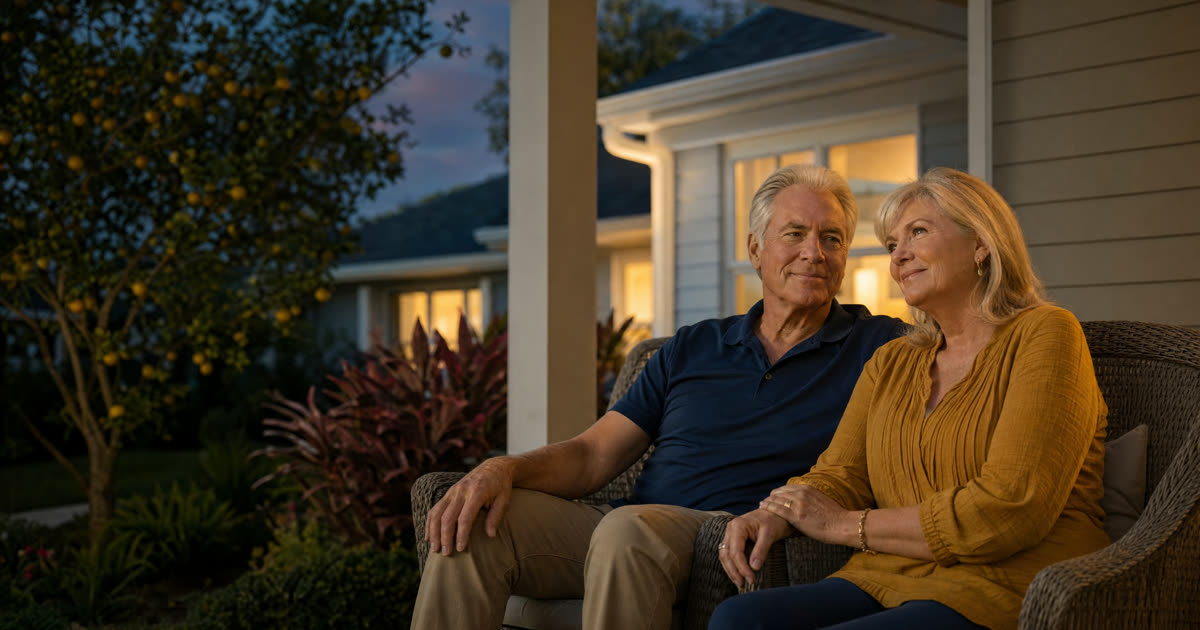
Margaret's Situation: A Familiar One for Federal Retirees
Margaret is 84 and lives in Pensacola. She spent decades as a civil servant at the naval air station and retired under the old Civil Service Retirement System, CSRS. Her husband had elected a survivor annuity for her years ago, and when he passed that benefit kicked in, adding to her own pension. She has kept her Federal Employees Health Benefits plan, FEHB, as her supplemental coverage alongside Medicare. Margaret is a composite I use to illustrate a pattern I see often in the Panhandle, where so many retirees came out of federal civilian service at NAS Pensacola, Eglin, and other installations. She is not an actual client, but her numbers and choices reflect what real families bring into my office.
What makes Margaret's case worth a dedicated conversation is that CSRS annuities tend to run considerably higher than Social Security checks, and federal retirees often carry health coverage (FEHB) that most Florida Medicaid applicants simply don't have. Those two facts change some of the mechanics, even though the underlying Florida Medicaid rules are the same ones I write about across this series.
Have this exact situation? Talk it through with a Florida attorney — the 20-minute consultation is free.
Book Free Consult or call (888) 388-8445Does the CSRS or FERS Annuity Count as Income?
Yes. For Florida's nursing home Medicaid program (often called the Institutional Care Program) and for the Statewide Medicaid Managed Care long-term care waiver, every dollar of gross monthly income counts toward the income limit, regardless of where it comes from. A CSRS annuity, a FERS annuity, Social Security retirement, a survivor annuity, military retired pay, it is all treated the same way by the Department of Children and Families when a worker reviews an ACCESS application.
This matters for CSRS retirees in particular. Because CSRS was designed as a standalone retirement system (without Social Security integration the way FERS was), CSRS annuities are frequently larger than a typical FERS annuity or Social Security benefit alone. That often pushes a CSRS retiree's gross income above Florida's income cap for Medicaid, which is why the Qualified Income Trust, or QIT, becomes such an important tool. I have written separately about how a QIT works in detail, but the short version for Margaret's purposes is this: if her combined CSRS annuity and survivor annuity exceed the income cap, her monthly annuity payments can be deposited into a properly drafted QIT, which allows her to qualify for Medicaid despite having income over the limit. The QIT does not reduce her actual income; it simply reorganizes where the deposit lands so DCF can approve the case.
The FEHB Premium: A Deduction That Helps After Eligibility
Once someone like Margaret is approved for nursing home Medicaid, nearly all of her remaining monthly income (after a small personal needs allowance and any allowance for a spouse at home) must go to the facility as her patient responsibility, sometimes called patient liability. This is a core feature of Medicaid's post-eligibility income rules, and it applies to every recipient, federal retiree or not.
What is distinct about Margaret's case is her ongoing FEHB premium. Florida's Medicaid rules allow certain health insurance premiums, deductibles, and coinsurance obligations to be deducted from the income that would otherwise go to the nursing home, reducing her patient responsibility by that amount. In practical terms, that means a retiree who keeps paying an FEHB premium out of her annuity each month may get credit for that premium before the facility calculates what she owes. This is worth raising directly with the DCF eligibility specialist at the time of application and verifying at each annual redetermination, since documentation of the premium amount needs to be current and properly submitted.
Should Margaret Keep or Drop FEHB Once She's on Medicaid?
This is one of the most common questions I get from adult children helping a federal retiree parent, and there is no single right answer for every family. A few things to weigh:
- Coordination with Medicare. Once someone is a long-term nursing home Medicaid recipient, Medicare and Medicaid together typically cover the bulk of medical and facility costs. FEHB, as a secondary payer, may provide less marginal benefit than it did before the person needed long-term care, particularly for routine institutional care costs.
- The premium deduction described above. As long as the FEHB premium can be deducted from patient responsibility, keeping the coverage is not simply a cost with no corresponding benefit in the Medicaid math. For some families, that deduction makes keeping FEHB worth it, since the premium is partly offset rather than fully out of pocket.
- Non-facility medical needs. If a parent has outside providers, dental needs, or anticipates ever leaving institutional care, FEHB may still be valuable for coverage gaps Medicare and Medicaid do not fill.
- Irrevocability concerns. Dropping FEHB during retirement can be difficult or impossible to reverse. I generally counsel families to think carefully, and often to keep the coverage, rather than cancel it to chase a small savings that the deduction rule may already provide.
I usually tell families this is a decision to make with both a benefits specialist familiar with OPM rules and an elder law attorney familiar with how Florida treats the premium, not a decision to make on the Medicaid application form alone.
The Survivor Annuity and the Community Spouse
Margaret's situation includes a detail many families overlook: her survivor annuity (from her late husband's federal service) is a continuing income stream in her own name now, not a spousal protection she needs to worry about losing. But the reverse scenario comes up constantly in my practice, where one spouse is entering a nursing home and the other, the community spouse, remains at home.
When a federal retiree couple includes a community spouse, that spouse's share of a CSRS or FERS annuity (if the annuitant is the one entering care) can sometimes be protected through Florida's spousal income allowance rules, which I cover in detail elsewhere in this series. The federal survivor annuity election itself, meaning whether a retiree chose a full or partial survivor benefit for a spouse at the time of retirement, is a separate decision made years earlier through the Office of Personnel Management and generally cannot be undone once retirement is finalized. That election determines what the surviving spouse receives after the retiree's death, and it is worth reviewing with an elder law attorney alongside the Medicaid income analysis, since the two systems interact but are not the same thing.
The Thrift Savings Plan as a Countable Asset
The Thrift Savings Plan, or TSP, is the federal government's version of a 401(k), and it is a common asset for FERS retirees in particular (CSRS retirees were less likely to have participated, since TSP was designed primarily for the newer system). For Medicaid purposes, retirement accounts including the TSP are generally treated as countable assets in Florida, whether the money is still accumulating or already being paid out as an annuity or periodic distribution.
If a TSP balance is a countable asset and pushes total assets above Florida's limit, there are legitimate spend-down and planning strategies, the same ones used for other retirement accounts and countable assets, that a Florida elder law attorney can walk through based on the person's full financial picture.
Verifying Everything With OPM and DCF
Every Florida Medicaid application requires documented proof of income and assets going back five years, along with a medical level-of-care determination arranged through the Department of Elder Affairs' CARES program. For a federal retiree, that means gathering annuity statements and verification letters issued by the Office of Personnel Management, which serve the same function Social Security award letters serve for other applicants. Keeping these records organized, along with FEHB premium statements and any TSP account statements, makes the ACCESS application process considerably smoother and reduces the back-and-forth that often causes delays.
If DCF denies a case or calculates patient responsibility in a way the family disputes, Florida law provides a right to request a hearing through the Office of Appeal Hearings. That process exists precisely for situations like a disputed premium deduction or an income calculation question, and families should not assume an initial determination is the final word.
Frequently Asked Questions
The Truestead Takeaway
Margaret's case, like that of so many federal retirees I meet in the Panhandle, shows that Florida Medicaid rules apply the same framework to a CSRS or FERS annuity that they apply to any other income source, but the details around the FEHB premium deduction, the survivor annuity, and the Thrift Savings Plan require someone who knows both systems. A Qualified Income Trust can resolve the income cap problem without touching her federal benefits, and her ongoing FEHB premium may reduce what she owes the nursing home each month, but none of that happens automatically. The sensible next step for any Florida family in this position is a review of the actual annuity statements, FEHB premium documentation, and any retirement account balances with a Florida elder law attorney before the ACCESS application is filed.
Have a child turning 18? Get the free 18 & Protected packet — the legal documents every Florida 18-year-old needs.
Get the Free PacketTalk to a Florida Attorney
Every family’s situation is different. Schedule a consultation with Arthur Simpson, Esq. to review your plan and your options under Florida law.
Schedule a Consultation →This article is for general informational purposes only and does not constitute legal advice, nor does reading it create an attorney-client relationship. Florida estate, elder, probate, and real estate law are fact-specific and change over time. Consult a licensed Florida attorney about your individual circumstances. Arthur Simpson, Esq. is licensed to practice law in the State of Florida. Attorney advertising.
Talk to a Florida Attorney — Free 20-Minute Consultation
Pick a time below. No obligation, no pressure — just answers.