
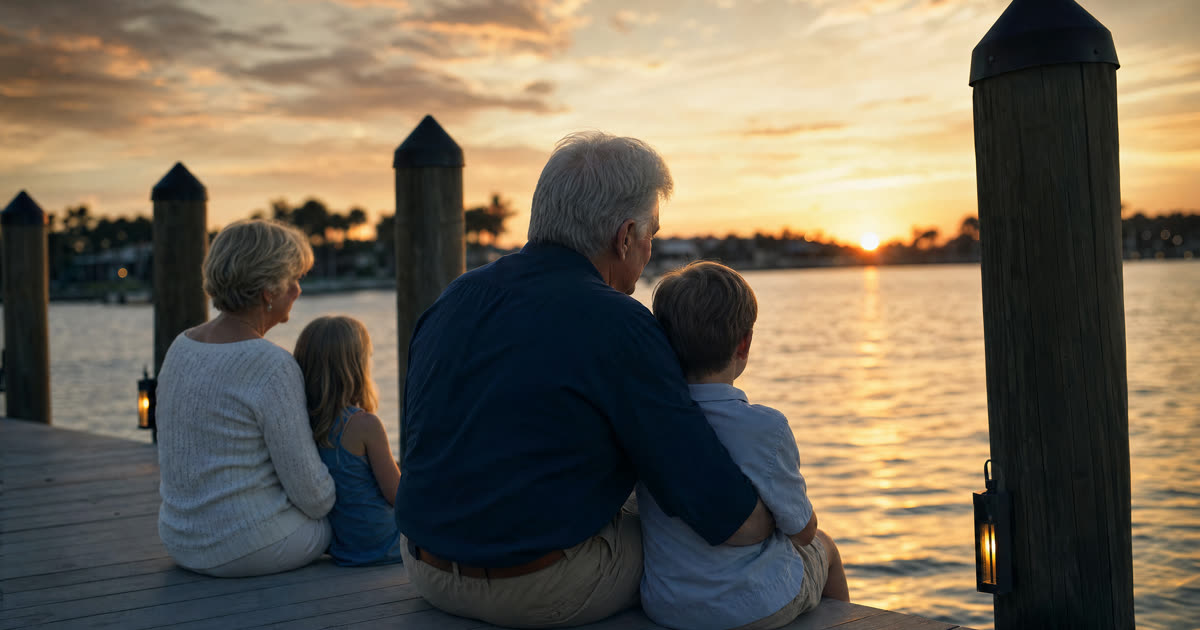
Sam's Situation: A Year Left, and a Facility That Won't Take Medicaid
Sam is 79 and lives in a private-pay memory care unit in Daytona Beach Shores. His family pays about $7,200 a month, and by their own math, they have roughly a year of savings left before the account is empty. Sam is a composite of the families I sit across from at Truestead, not an actual client, but his numbers are the numbers I see constantly on the east coast of Florida: a beautiful, well-staffed memory care community, a rising monthly bill, and a facility that has never accepted Medicaid and has no plan to start.
Here is the piece families often do not realize until it is almost too late: memory care is typically licensed in Florida as a type of assisted living facility (ALF), not a nursing home. That distinction controls almost everything about what Medicaid will and will not pay for Sam, and it is why his family cannot simply wait for the money to run out and assume Medicaid will step in and cover the same $7,200 bill.
Have this exact situation? Talk it through with a Florida attorney — the 20-minute consultation is free.
Book Free Consult or call (888) 388-8445Why an ALF Memory Care Unit Often Will Not Take Medicaid
Florida Medicaid has a long-term care program that can pay for certain personal care services delivered inside an ALF, through what the state calls the Statewide Medicaid Managed Care Long-Term Care Program (SMMC-LTC). But that program pays for care services, not room and board. Even where an ALF is enrolled to accept SMMC-LTC funds for care, the facility can still charge the resident privately for the room, meals, and housing costs, which is the bulk of the bill.
Many private-pay memory care communities, like the one in Sam's example, never enroll in the SMMC-LTC network at all. They are built around a private-pay business model, and the facility is under no obligation to accept Medicaid funds now or ever. So the honest starting question for any family in Sam's position is not "will Medicaid pay this bill," but rather: does this specific facility accept Medicaid in any form, for any part of the cost, and if not, is there a waiting list, a sister facility, or a different placement that does.
The Medicaid-Accepting Alternatives: Waiver ALFs and Nursing Home Memory Units
When a family in Sam's position starts looking for Medicaid-accepting placement, there are generally two paths.
- A Medicaid-waiver ALF with memory care. Some ALFs do participate in the SMMC-LTC waiver and have secured memory care wings. These facilities exist in Florida, but they are limited in number, and the waiver itself has a waitlist in many regions. Being medically and financially eligible does not guarantee an open slot the month the money runs out. Families often need to get on this list well ahead of the actual need.
- A nursing home with a dementia or memory care unit. Florida's Nursing Home Medicaid program is broader in what it covers. For residents who qualify financially and who meet the medical standard of needing a nursing facility level of care, called an NFLOC, the nursing home program covers room, board, and care together. A dementia diagnosis alone does not automatically mean someone meets this standard, the state's CARES assessment team makes that determination, but many people with more advanced dementia do qualify. For a family whose ALF will not take Medicaid, a nursing home memory unit is often the more realistic full-coverage path.
Neither path is instant. Waiver slots and nursing home Medicaid applications both take time to process, and the medical eligibility review is a separate step from the financial one. That is exactly why the runway matters.
Using the Runway: What Sam's Family Did With Their Remaining Months
With about a year of private-pay months left, Sam's family had something valuable that many families in crisis do not: time. Here is what that runway allowed, and what I generally tell families to consider doing with theirs.
- Confirm the real number of months left, not a rough guess. Adding Sam's income (Social Security and a small pension) against the $7,200 monthly cost gave his family a firmer countdown than "about a year," which let them plan around an actual month, not a feeling.
- Start the Medicaid financial and medical eligibility process early, rather than waiting until the account is nearly empty. Applications and the CARES level-of-care assessment take time, and starting early means the paperwork is not a scramble during a crisis.
- Review whether a caregiver contract makes sense. In some family situations, a properly drafted personal care agreement between the applicant and a family caregiver can compensate that caregiver for real services rendered, which can be a legitimate part of an asset and income plan, done correctly and with documentation, not as a way to informally hide funds.
- If there is a spouse still living independently, look at protections for that spouse's income and assets before an application is filed. Florida law provides ways to preserve resources for a community spouse so that one partner's care needs do not leave the other financially unprotected.
- Get on any relevant waitlists now. Sam's family contacted a Medicaid-waiver ALF with an available memory care wing and a well-regarded nursing home with a secured dementia unit, months before the money was projected to run out, rather than after.
How This Resolved for Sam's Family
By working backward from Sam's actual runway, his family avoided a last-minute scramble. They began the Medicaid application and CARES assessment process several months ahead of when the private funds were projected to run out, confirmed that their preferred nursing home's memory unit accepted Medicaid and had space, and arranged the transition on their own timeline rather than the facility's. Sam moved once, deliberately, to a secured unit that would accept Medicaid coverage going forward, instead of being displaced abruptly when the account hit zero. The plan did not make memory care free. It made the transition orderly, and it gave the family confidence that Sam's care would continue without an unplanned gap.
Frequently Asked Questions
The Truestead Takeaway
Sam's story is really about timing. Private-pay memory care is a real and valuable option, but it is not designed to convert into Medicaid coverage automatically when the money runs low, because most memory care units are ALFs and Florida Medicaid does not pay ALF room and board. The families who come through this transition with the least disruption are the ones who calculate their actual runway early, ask the facility hard questions in writing, start the Medicaid and level-of-care process well ahead of the last dollar, and get on the list for a Medicaid-accepting ALF or nursing home memory unit before they need it. If your family is watching a similar countdown, the sensible next step is to sit down with a Florida elder law attorney while there is still runway left, not after it runs out.
Sources
- Dementia Care Central, "Florida Memory Care (Assisted Living for Alzheimer's / Dementia)," March 26, 2026
- Brevy Care, "Florida Memory Care in 2026: Costs, Medicaid & New License Law," July 10, 2026
- Brevy Care, "Florida Assisted Living: Licenses, Costs, and Medicaid (2026)," July 1, 2026
- Nolo, "When Medicaid in Florida Will Pay for a Nursing Home, Assisted Living, or Home Health Care," July 14, 2026
- Elder Needs Law, "Florida Medicaid for Assisted Living: A Complete Guide," 2026
- MedicaidLongTermCare.org, "Florida Medicaid Programs for Long Term Care," August 12, 2026
- Medicaid Planning Assistance, "Florida Medicaid Eligibility: 2026 Income & Assets Limits," 2026
Have a child turning 18? Get the free 18 & Protected packet — the legal documents every Florida 18-year-old needs.
Get the Free PacketTalk to a Florida Attorney
Every family’s situation is different. Schedule a consultation with Arthur Simpson, Esq. to review your plan and your options under Florida law.
Schedule a Consultation →This article is for general informational purposes only and does not constitute legal advice, nor does reading it create an attorney-client relationship. Florida estate, elder, probate, and real estate law are fact-specific and change over time. Consult a licensed Florida attorney about your individual circumstances. Arthur Simpson, Esq. is licensed to practice law in the State of Florida. Attorney advertising.
Talk to a Florida Attorney — Free 20-Minute Consultation
Pick a time below. No obligation, no pressure — just answers.