
The Two Decisions Every Pinellas Family Has to Get Through
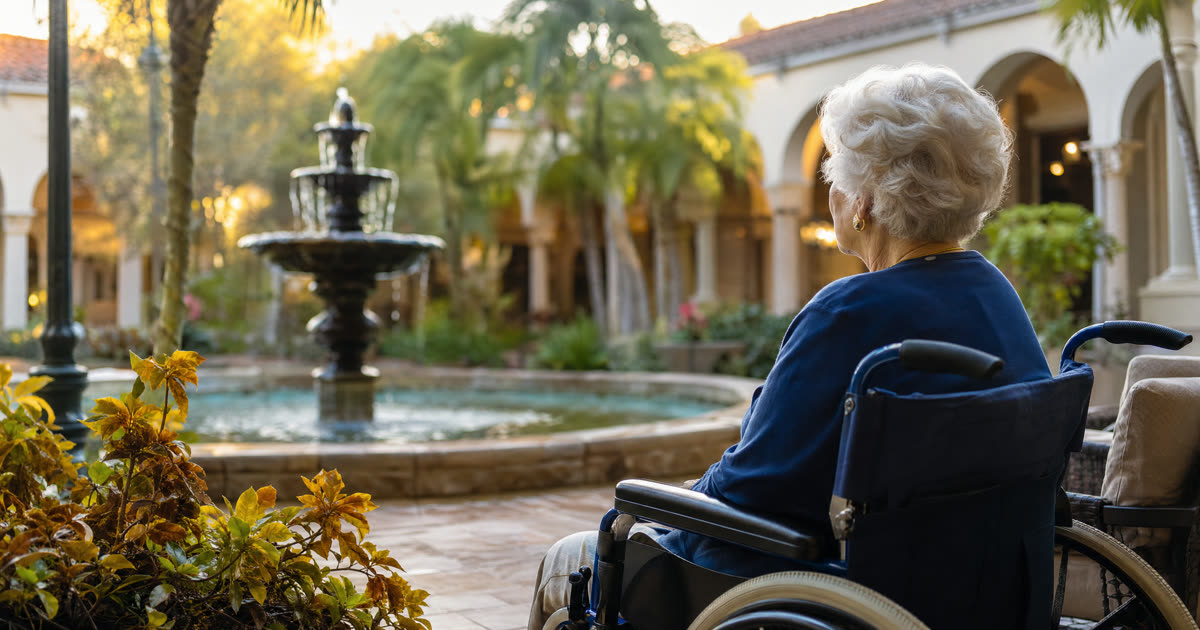
Shirley is 87 and lives in a condo in Clearwater that her family has owned for decades. A special assessment just landed in the mailbox, her balance is slipping after a fall, and her daughter has started asking whether Medicaid could help pay for a nursing home if it comes to that. Shirley is a composite picture built from the kinds of calls my office gets regularly, not an actual client, but her situation maps almost exactly onto what Pinellas families face every month.
Every Florida nursing home Medicaid case, no matter the county, comes down to two separate decisions made by two separate state agencies. The Department of Children and Families (DCF) decides whether the applicant is financially eligible, meaning income and countable assets fall within the program's limits. That application is filed through DCF's online ACCESS Florida system, and once it is submitted, DCF schedules a phone interview rather than an in-person meeting at a local office. There is no DCF office in Pinellas County that a family needs to drive to for this part.
The second decision belongs to CARES, the Comprehensive Assessment and Review for Long-Term Care Services program operated by the Department of Elder Affairs. A CARES nurse or assessor determines whether the applicant actually needs a nursing facility level of care, which is a separate question from whether the family can afford one. For Pinellas County residents, the CARES unit covering this area is based in Largo and also serves Pasco County. Families do not choose between these two steps. Both have to clear before Medicaid will pay a nursing facility.
This article does not re-cover the income cap, the Qualified Income Trust, the five-year lookback, or spend-down math, since those are addressed in depth elsewhere in this series. The focus here is strictly on where Pinellas families go and who they deal with along the way.
Have this exact situation? Talk it through with a Florida attorney — the 20-minute consultation is free.
Book Free Consult or call (888) 388-8445The Local Front Door: The Area Agency on Aging and the Elder Helpline
Before Shirley's family ever files a DCF application, the smartest first call is usually to the Area Agency on Aging of Pasco-Pinellas (AAAPP), which serves as the region's Aging and Disability Resource Center (ADRC). This is the organization that has fielded aging and caregiving questions in this part of the Gulf Coast for decades, and it functions as a single point of contact for benefits screening, caregiver support, meal programs, and information about home and community based services.
For a family exploring whether a parent might qualify for in-home care through Florida's home and community based waiver, rather than nursing home placement, the AAAPP is where that conversation starts. Their helpline can do a preliminary Medicaid eligibility screening and explain what documentation a family will eventually need. It is worth knowing that the home and community based waiver (the program that can pay for care at home or in assisted living) and nursing home Medicaid are administered differently on the ground: there has historically been a substantial waiting list for the waiver program, while nursing home Medicaid itself does not carry that same kind of waitlist once a person is assessed as needing that level of care. That distinction matters a great deal for a family deciding whether to plan for Shirley to stay in her condo with help, or to plan for a nursing facility.
What Care Actually Costs Around Pinellas County
Private-pay nursing home rates in the Tampa Bay area, including Pinellas County, run well above what Medicaid ultimately reimburses, and the gap between a facility's private rate and its Medicaid rate is often the single biggest shock for families new to this process. A specific, reliable current-year daily or monthly rate for Pinellas County facilities was not available for this piece, and local rates vary significantly by facility, room type, and level of care, so I am intentionally not printing a number I cannot stand behind. What I can tell a Pinellas family with confidence is this: private pay is typically charged by the day, skilled rehabilitation stays covered briefly by Medicare are billed differently than long-term custodial care, and once a resident transitions to Medicaid, the facility is paid a state-set daily rate that is considerably lower than its private rate. Families should ask a facility's business office directly for its current private-pay rate and its Medicaid per diem before assuming either figure.
Finding a Certified Bed and Having the 'Medicaid Pending' Conversation
Not every nursing home accepts Medicaid, and even among those that do, not every bed in the building is a Medicaid-certified bed. The Agency for Health Care Administration (AHCA) maintains the state's facility locator tool, which lets a family search Medicaid-certified nursing facilities by county. Pinellas County has a meaningful number of Medicaid-certified facilities serving the area, and a family can use AHCA's locator to confirm certification status for any facility under consideration rather than relying on a brochure or a sales conversation.
This is also where the phrase Medicaid pending becomes important. Many families, including a family in Shirley's position, end up placing a parent in a facility before the Medicaid application has actually been approved. A well-run business office will admit a resident as "Medicaid pending," meaning the facility accepts that an application is in process and agrees to bill Medicaid retroactively once approved, often collecting only the resident's required monthly patient-responsibility amount in the meantime rather than the full private rate. Families should have this conversation explicitly with the admissions or business office staff before signing an admission agreement, and should get in writing what happens if the application is denied or delayed.
Three Local Wrinkles Pinellas Families Run Into
Pinellas County has some texture to it that shows up again and again in these cases.
- Seasonal residents: Pinellas County has a large seasonal and part-year population. A snowbird parent who splits time between a Florida condo and a home up north needs Florida residency and intent to remain in Florida established clearly, since Medicaid eligibility runs through the state where the applicant actually resides, not simply where family happens to be.
- Hospital-to-rehab patterns: It is extremely common locally for a parent to be hospitalized, discharged to a skilled rehabilitation stay covered briefly by Medicare, and only then face the question of whether rehab will succeed or whether long-term custodial placement is needed. Families often start the Medicaid conversation during that rehab window, which is actually good timing, since CARES and DCF processes take time to work through.
- Condo and manufactured-home ownership: Pinellas County has a high concentration of condo and manufactured-home living among seniors, and Shirley's situation, a condo with a looming special assessment, is a good example. A home's status as Florida homestead affects how it is treated for Medicaid asset purposes, and a pending special assessment or HOA obligation can factor into what a family does with the property during the application process. This is an area where the specific facts matter enough to warrant a direct conversation with an elder law attorney rather than general guidance.
A Realistic Timeline, From First Call to Approval
For a family like Shirley's, the sequence generally looks like this. First comes the call to the Area Agency on Aging's helpline, simply to get oriented and understand whether nursing home Medicaid or a home and community based waiver fits the situation better. Next comes gathering documentation: identification, Social Security and Medicare cards, proof of every source of income, and up to five years of statements for every bank, brokerage, and retirement account, including accounts that have since been closed. This document-gathering step is often the slowest part of the whole process and the one families most underestimate.
Once the ACCESS Florida application is filed, DCF schedules a phone interview rather than requiring an office visit, and the agency's standard is to decide a complete application within 45 days under Florida's administrative rules. Running in parallel, CARES will assess or review the medical need for nursing facility level of care. Both pieces need to be in place before approval. If a denial comes back, whether on financial or medical grounds, Florida law allows the family to request a hearing through the Office of Appeal Hearings, a formal process with its own deadlines that a family should not navigate alone if they can avoid it.
Families with straightforward finances sometimes move through this in a matter of weeks once paperwork is complete. Families with a home that needs addressing, assets that need to be properly spent down, or any transfers in the five-year lookback period should expect the timeline to stretch, and should strongly consider involving a Florida elder law attorney before filing rather than after a denial.
Frequently Asked Questions
The Truestead Takeaway
For a family like Shirley's, the path through Pinellas County Medicaid runs through two tracks at once: DCF's ACCESS system for the financial side, and CARES for the medical side, with the Area Agency on Aging of Pasco-Pinellas as a genuinely useful starting point for orientation. The condo, the special assessment, and the timing of any transfers are exactly the kind of local wrinkles that benefit from a real review rather than guesswork. The sensible next step for any Pinellas family in this position is to call the local ADRC for general orientation, then sit down with a Florida elder law attorney before filing anything with DCF, especially where a home, a pending assessment, or prior asset transfers are part of the picture.
Sources
- Florida Department of Children and Families, ACCESS Florida Application guidance
- Florida Department of Elder Affairs, CARES Program overview
- Area Agency on Aging of Pasco-Pinellas (AAAPP), Information and Access services
Have a child turning 18? Get the free 18 & Protected packet — the legal documents every Florida 18-year-old needs.
Get the Free PacketTalk to a Florida Attorney
Every family’s situation is different. Schedule a consultation with Arthur Simpson, Esq. to review your plan and your options under Florida law.
Schedule a Consultation →This article is for general informational purposes only and does not constitute legal advice, nor does reading it create an attorney-client relationship. Florida estate, elder, probate, and real estate law are fact-specific and change over time. Consult a licensed Florida attorney about your individual circumstances. Arthur Simpson, Esq. is licensed to practice law in the State of Florida. Attorney advertising.
Talk to a Florida Attorney — Free 20-Minute Consultation
Pick a time below. No obligation, no pressure — just answers.