
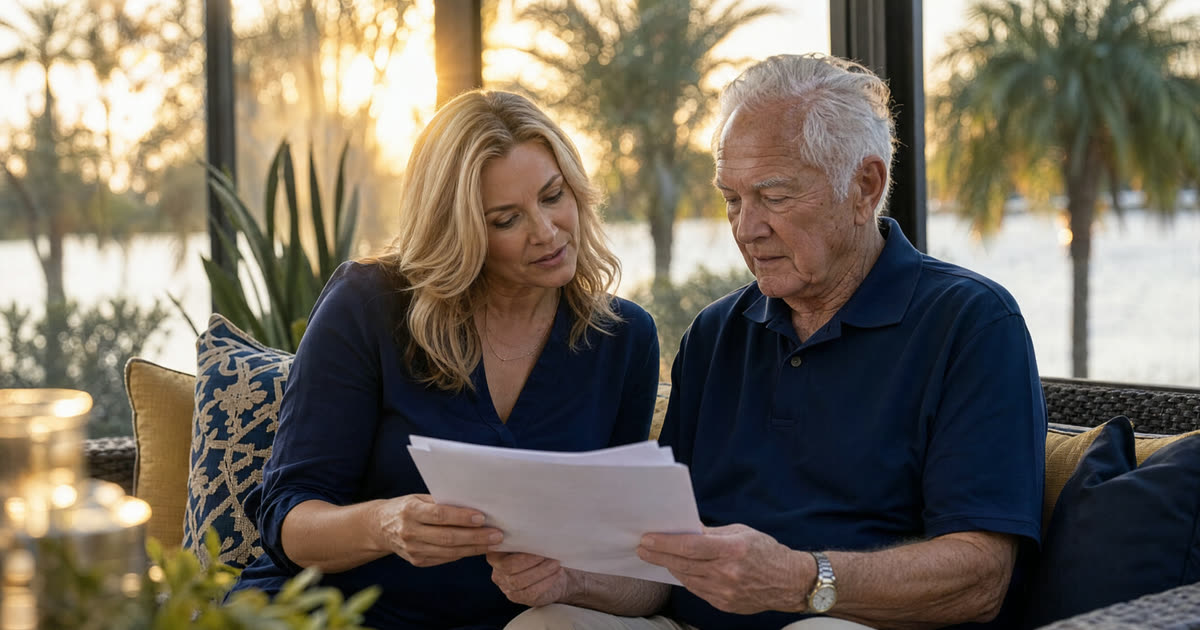
Vince's Situation: A Common Story in Titusville
Vince is 77 and lives in Titusville. He's a composite example, not an actual Truestead client, but his situation is one I see often. Years ago, at his bank, Vince signed a durable power of attorney naming his daughter as agent. It's a perfectly fine, simple document. It lets her walk into the branch, deposit a check, and manage his checking account.
The trouble started when Vince needed nursing home care and the family met with an elder law attorney to talk about Medicaid planning. The attorney read the form, looked up, and said: this isn't enough. Vince's daughter had legal authority to manage his money, but she had no authority to do the things Florida Medicaid planning often requires: make gifts beyond ordinary limits, create or fund a trust, or change how his retirement accounts pay out. The form was silent on all of it.
Have this exact situation? Talk it through with a Florida attorney — the 20-minute consultation is free.
Book Free Consult or call (888) 388-8445What Florida Law Actually Requires: The 'Super Powers'
Florida's Power of Attorney Act, found in F.S. Chapter 709, treats certain powers differently from everyday banking authority. Under F.S. § 709.2202, an agent cannot exercise these powers unless the principal separately signed or initialed next to each one, specifically enumerated, not just implied by broad language elsewhere in the document. Elder law attorneys often call these the "super powers" because of how consequential they are.
The powers that must be individually initialed include the authority to:
- Create, amend, revoke, or terminate a trust
- Make gifts of the principal's property, beyond what the law allows automatically
- Change beneficiary designations on life insurance, retirement accounts, or payable-on-death accounts
- Waive the principal's right to be a beneficiary of a joint and survivor annuity, including a survivor benefit under a retirement plan
- Create or change survivorship rights in jointly held property
- Delegate the agent's own authority under the power of attorney
A form that only says "my agent may handle my banking and financial affairs" does not grant any of these. Florida requires the specific line item, initialed, before an agent can touch them.
Why This Matters So Much for Medicaid Planning
Medicaid planning strategies almost always depend on one or more of these super powers. Funding a trust as part of asset restructuring, for example, requires trust-creation authority. Setting up a Qualified Income Trust, sometimes needed when a person's income exceeds Medicaid's income limit, requires the agent to create and fund a trust on the principal's behalf. Purchasing a Medicaid-compliant annuity, transferring assets between spouses, or making gifts as part of a planning strategy all depend on gifting or trust powers being expressly written into the document.
Without those powers spelled out, the agent legally cannot do these things, no matter how urgently the family needs to act or how clearly everyone agrees it's the right move. This is precisely what Vince's attorney meant. His daughter had authority to pay his bills, but not to help implement a Medicaid plan.
Durable vs. Springing, and Why Banks Reject Old Forms
A durable power of attorney remains effective even after the principal becomes incapacitated, which is exactly what's needed for long-term care and Medicaid planning. A "springing" power, one that only takes effect upon a doctor's certification of incapacity, can create delays at the worst possible moment, since the agent has to first prove incapacity before anyone will honor the document. Florida law generally favors durable powers that are effective immediately upon signing, precisely to avoid that gap.
Families are also increasingly running into practical friction with banks and financial institutions refusing to honor older or generic power of attorney forms, especially ones that predate the 2011 overhaul of Chapter 709 or that use vague, boilerplate language. Institutions want to see the specific, initialed grants of authority the statute requires. A form that looks fine on paper can still get rejected at the teller window if it doesn't meet current statutory form.
The Time to Fix This Is Now, While Capacity Exists
A power of attorney is only as good as the mind that signs it. Once a person loses the capacity to understand and execute legal documents, a power of attorney can no longer be updated, no matter how badly the family needs it. This is why elder law attorneys push families to review these documents early, well before a health crisis, rather than waiting until a nursing home is calling.
For Vince, this meant a straightforward next step: sit down with his elder law attorney while he still had full capacity and sign a new, properly drafted durable power of attorney that separately initials the gifting and trust powers his family's Medicaid strategy would need. It didn't mean giving away control today. It meant making sure his daughter would have the legal tools to act on his behalf later, without a guardianship proceeding standing in the way.
Frequently Asked Questions
The Truestead Takeaway
Vince's family learned an important lesson many Florida families face too late: a power of attorney that works fine for everyday banking may not work at all for Medicaid planning. Florida law requires gifting, trust creation, beneficiary changes, and similar powers to be spelled out and separately initialed, not assumed from general language. If your family is holding an older or bank-issued power of attorney and long-term care may be on the horizon, it's worth having a Florida elder law attorney review the document now, while your parent still has the capacity to sign an updated one if needed. Waiting for a crisis is the one thing this planning cannot fix.
Sources
- Florida Senate, Florida Statutes Section 709.2202 (2024)
- Burzynski Elder Law, "How a Florida Durable Power of Attorney Helps in Medicaid Planning," August 11, 2025
- Elder Needs Law, "Is Your Florida Power of Attorney Medicaid Compliant," May 9, 2026
- Blocks Scarpa, "Can A Power Of Attorney Create An Irrevocable Trust?" July 15, 2026
- Lumsden Law Firm, "The Law of Power of Attorney in Florida: A Practical Guide," July 5, 2026
Have a child turning 18? Get the free 18 & Protected packet — the legal documents every Florida 18-year-old needs.
Get the Free PacketTalk to a Florida Attorney
Every family’s situation is different. Schedule a consultation with Arthur Simpson, Esq. to review your plan and your options under Florida law.
Schedule a Consultation →This article is for general informational purposes only and does not constitute legal advice, nor does reading it create an attorney-client relationship. Florida estate, elder, probate, and real estate law are fact-specific and change over time. Consult a licensed Florida attorney about your individual circumstances. Arthur Simpson, Esq. is licensed to practice law in the State of Florida. Attorney advertising.
Talk to a Florida Attorney — Free 20-Minute Consultation
Pick a time below. No obligation, no pressure — just answers.