
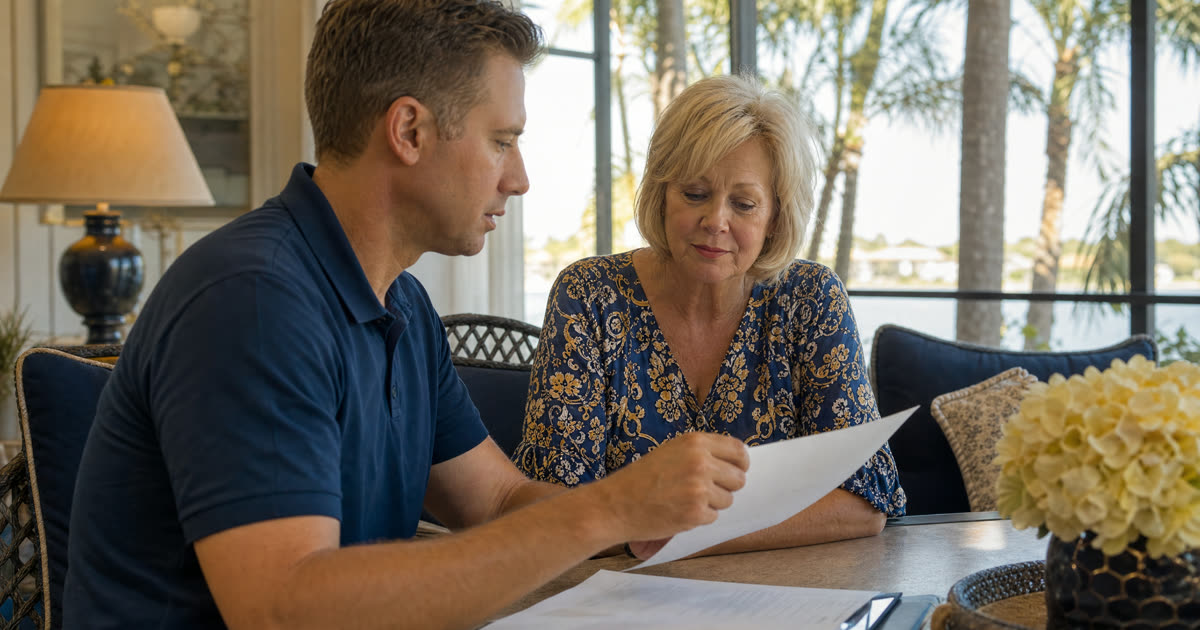
Sharon's Situation: A Daughter in New Jersey, A Mother in Port St. Lucie
Sharon is 52 and lives in Cherry Hill, New Jersey. Her mother, Ida, lives alone in Port St. Lucie and has begun showing signs of dementia that worry her doctors and her neighbors. Sharon is Ida's only living family. She is asking a simple but urgent question: if a Florida court decides Ida needs a guardian, can Sharon, living eight hundred miles away, actually serve? (Sharon is a composite example, not a Truestead client, but her situation reflects one we see often.)
Florida guardianship is a court process under Chapter 744 of the Florida Statutes, used when a judge finds a person incapacitated and no less restrictive option, like a power of attorney or health care surrogate, will adequately protect them. This piece focuses on one narrow but common question inside that process: whether an out-of-state relative can be the one appointed.
Have this exact situation? Talk it through with a Florida attorney — the 20-minute consultation is free.
Book Free Consult or call (888) 388-8445Who Qualifies as a Nonresident Guardian Under Florida Law
Florida does not close the door to out-of-state family. Under F.S. 744.309, a nonresident may serve as guardian of a Florida resident only if the nonresident fits within specific family categories:
- A relative connected to the ward by direct bloodline (parent, child, grandparent, grandchild)
- A legally adopted child or adoptive parent of the ward
- A spouse, sibling, aunt, uncle, niece, or nephew of the ward
- Someone related by bloodline to one of the relatives listed above
- The spouse of a person who otherwise qualifies
Sharon, as Ida's daughter, is related by direct bloodline. That places her squarely within the categories the statute allows. A neighbor, close family friend, or unrelated caregiver from out of state would not qualify, no matter how devoted they were to Ida's welfare. The relationship requirement exists because Florida wants nonresident guardians to have a genuine, legally recognized family stake in the ward's life, not just goodwill.
A guardian, resident or not, must also be at least 18, free of felony convictions, and not under any adjudication of their own incapacity. If a Florida guardianship case moves forward for Ida, Sharon's relationship alone answers the eligibility question in her favor.
The Resident Agent Requirement
Qualifying to serve is only the first hurdle. If Sharon is appointed guardian and her duties include managing Ida's property or finances, Florida law requires her to designate a Florida resident agent. This is a person located within the state who can accept legal papers and communications on the guardian's behalf.
The resident agent is not a co-decision-maker and does not share Sharon's authority over Ida's care or assets. The role is administrative: a fixed point of contact in Florida so the court, banks, and other parties are not left trying to reach a guardian who lives in another state for routine legal notices. Many families ask a Florida attorney, accountant, or trusted local relative to serve in this capacity.
The Practical Problems Sharon Would Face
Even with legal eligibility settled, distance creates real friction in day-to-day guardianship. If Sharon were appointed sole guardian of Ida's person and property, she would likely encounter:
- Court appearances. Guardianship is supervised by the court, and hearings, some routine and some not, may require her presence.
- Care oversight. A guardian of the person is expected to monitor Ida's living situation, medical care, and well-being in Port St. Lucie, which is difficult to do consistently from New Jersey.
- Local banking and bill-paying. Managing a Florida bank account, paying Florida property taxes or homeowner association dues, and responding quickly to a maintenance issue at the house all go smoother with someone physically nearby.
- Annual reporting. Guardians must file an initial guardianship plan and inventory, then annual accountings and reports to the court, which require accurate, current information about the ward's condition and finances.
Remote Tools and Sharon's Co-Guardian Arrangement
Florida courts have expanded the use of remote hearings, which helps out-of-state guardians participate in routine proceedings without a flight every time. Video conferencing, electronic filing, and phone check-ins with a case manager or care coordinator can meaningfully close the distance gap for many guardianship duties.
Still, in situations like Sharon's, courts and attorneys often recommend a local co-guardian arrangement rather than relying on Sharon alone. One common structure: Sharon serves as co-guardian handling financial oversight and major decisions from New Jersey, while a professional guardian registered with Florida's Office of Public and Professional Guardians, or another qualifying local relative or trusted person, serves as co-guardian of the person, managing day-to-day care, medical appointments, and in-person visits in Port St. Lucie.
This is the arrangement that made the most sense for Ida's case. Sharon retained decision-making authority and financial oversight as co-guardian, while a local professional guardian handled the boots-on-the-ground responsibilities that distance made impractical for Sharon to manage well. Florida has not adopted the interstate guardianship transfer law that some states use (the UAGPPJA), so this kind of local partnership, built from the start, tends to work better than trying to run everything remotely and hoping to patch problems later.
Families in Sharon's position sometimes also consider whether moving the parent closer to the out-of-state relative is realistic. That path avoids the mixed-residency logistics entirely, but it raises its own questions about uprooting someone from their home, community, and medical providers, and it is not the right answer for every family or every stage of decline.
Frequently Asked Questions
The Truestead Takeaway
Sharon's story shows that distance does not disqualify a devoted daughter from serving as guardian in Florida, but it does shape how the guardianship should be structured. Because Sharon is Ida's child, she meets Florida's family relationship test for nonresident guardians, and with a resident agent in place and a local co-guardian handling day-to-day care in Port St. Lucie, the arrangement can work well for everyone, including Ida. Every family's facts are different, and whether guardianship is even necessary, or whether existing documents already cover the need, depends on the specific circumstances. If you are facing a similar decision for a parent or loved one in Florida, it is worth having a Florida elder law attorney review the situation before a crisis forces the issue.
Sources
- The Florida Senate, 2025 Florida Statutes, Chapter 744, Section 309 (Nonresident guardians)
- The Florida Senate, 2024 Florida Statutes, Chapter 744, Section 307 (Resident agent for nonresident guardian)
- The Florida Bar, Consumer Pamphlet: What is Guardianship?, January 5, 2026
Have a child turning 18? Get the free 18 & Protected packet — the legal documents every Florida 18-year-old needs.
Get the Free PacketTalk to a Florida Attorney
Every family’s situation is different. Schedule a consultation with Arthur Simpson, Esq. to review your plan and your options under Florida law.
Schedule a Consultation →This article is for general informational purposes only and does not constitute legal advice, nor does reading it create an attorney-client relationship. Florida estate, elder, probate, and real estate law are fact-specific and change over time. Consult a licensed Florida attorney about your individual circumstances. Arthur Simpson, Esq. is licensed to practice law in the State of Florida. Attorney advertising.
Talk to a Florida Attorney — Free 20-Minute Consultation
Pick a time below. No obligation, no pressure — just answers.