
Loretta's Question: Does Medicaid Take the House Back?
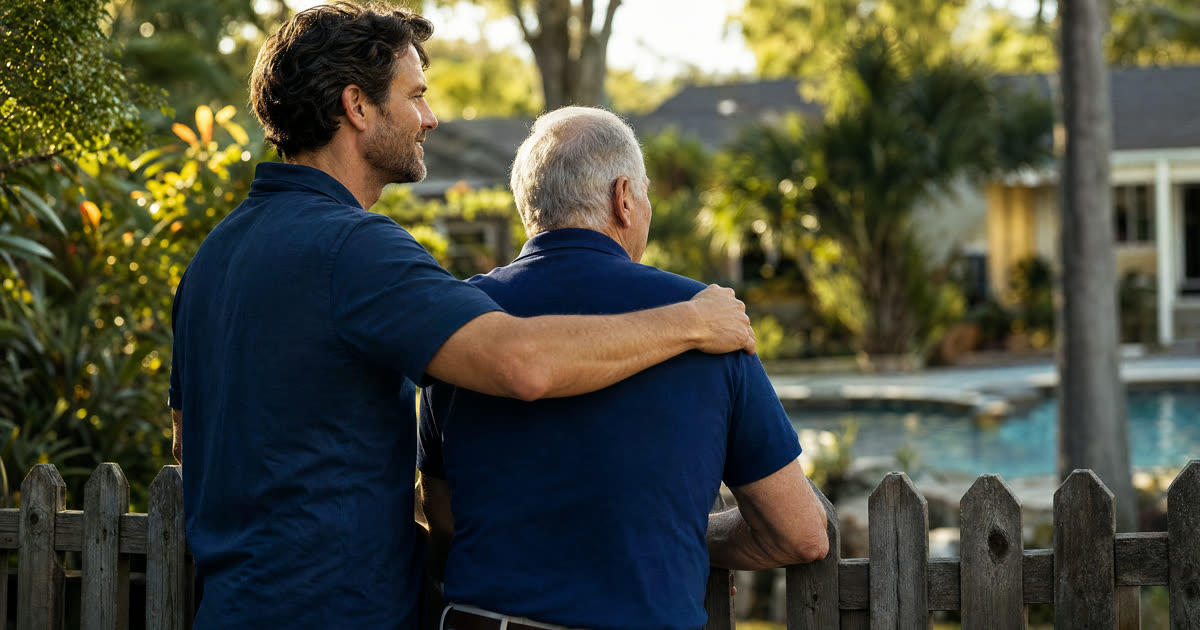
Loretta is 86, lives in a modest homestead in Daytona Beach, and has been on nursing home Medicaid for about two years. She's a composite of the kind of client I see regularly at Truestead, not an actual client, but her situation is a common one. Her son does the driving, pays the bills, and worries quietly about one thing: will the state take the house when she dies?
It's one of the most common questions I get from adult children in his position, and the answer starts with understanding what Florida's Medicaid estate recovery program can actually reach in the first place.
Have this exact situation? Talk it through with a Florida attorney — the 20-minute consultation is free.
Book Free Consult or call (888) 388-8445What Estate Recovery Actually Reaches: The Probate Estate
Under Florida law, the Agency for Health Care Administration (AHCA) has the right, after a Medicaid recipient dies, to seek reimbursement for the long-term care benefits it paid on that person's behalf. This is called Medicaid estate recovery, and it's a real program, not a myth.
But Florida's recovery program is limited by design. It reaches only the recipient's probate estate, meaning the assets that pass through the probate court process after death. Property that transfers directly to a beneficiary by some other legal mechanism, outside of probate, is generally beyond the state's reach.
That single fact is the key to understanding why so many Florida elder law attorneys recommend a lady bird deed for a homestead like Loretta's. As I already tell readers of our general explainer, the owner keeps full control of the property for life under this deed, including the right to sell it or revoke the deed entirely, and the property passes to the named beneficiaries at death without going through probate at all.
Why a House Passing by Lady Bird Deed Never Enters the Probate Estate
A lady bird deed, sometimes called an enhanced life estate deed, names a remainder beneficiary (often an adult child) while the owner retains a life estate with expanded powers. When the owner dies, title passes automatically to the named beneficiary by operation of the deed itself. No probate court order is needed to transfer it.
Because the house never becomes a probate asset, it simply is not part of what AHCA can look to for reimbursement. This isn't a loophole or a trick. It reflects how Florida's recovery statute is written: recovery is tied to the probate estate, and a lady bird deed keeps real property out of that estate by its very structure.
Florida does not have a transfer-on-death deed for real estate the way some other states do. The lady bird deed is the tool Florida homeowners and their attorneys have used for decades to accomplish a similar result, built on common law, longstanding Florida title standards, and years of practice rather than a specific statute creating it by name.
The Homestead Protection That Often Applies Anyway
Here is something worth understanding clearly: even without a lady bird deed, Florida's homestead protections frequently shield a family home from estate recovery when it passes to a surviving spouse or heirs. Florida's constitutional homestead protections (Article X, Section 4 of the Florida Constitution) are strong, and property that descends to a decedent's heirs under Florida's homestead devise rules often stays outside recovery even without extra planning.
So why bother with the deed at all if homestead protection may already apply? Because relying on homestead protection alone still generally requires the house to pass in a way that Florida law recognizes as staying outside probate, and that outcome depends on how title is held and how the estate is administered after death. A lady bird deed removes the guesswork. It routes the house around probate directly, by deed, rather than depending on how heirship and homestead status get sorted out afterward.
Can Loretta Sign One Now, While She's Already on Medicaid?
Yes. Being on Medicaid does not prevent someone from signing a lady bird deed, and timing is one of the most reassuring parts of this planning tool. The deed can be signed and recorded at any point before death, including well after the person has already moved into a nursing home and is already receiving Medicaid benefits.
This works because of how the deed is structured. Because Loretta would retain full control during her life (the right to sell, mortgage, or revoke the arrangement entirely), Medicaid does not treat the signing of a lady bird deed as a completed gift. That matters enormously, because a completed gift of a home can trigger Medicaid's five-year look-back penalty and jeopardize eligibility. A properly drafted lady bird deed avoids that problem because nothing is actually given away during Loretta's lifetime.
If Loretta is no longer able to sign for herself, a person acting under a validly executed durable power of attorney may be able to sign on her behalf, provided the power of attorney document grants the authority needed to convey real property. This is a detail that deserves individual review, since power of attorney documents vary widely in scope.
What Still Gets Recovered, and What Doesn't
A lady bird deed is not a shield against every Medicaid recovery claim, and it's important for families to understand its limits. Estate recovery can still reach other probate assets, such as a bank account titled solely in the recipient's name with no beneficiary designation, or other property that does pass through probate. The lady bird deed protects the specific asset it's applied to, typically the home, not the entire estate.
It's also worth remembering that Florida's approach to limiting recovery to the probate estate is a matter of current state policy and statute. It has been consistent for years, but like any state Medicaid policy, it is not permanently fixed and could be affected by future legislative or agency changes. That is one more reason to have a plan in place now rather than assuming today's rules will look identical decades from now.
- Protected by a properly executed lady bird deed: the home itself, passing directly to named beneficiaries
- Not protected: other probate assets without a similar non-probate transfer mechanism
- Also often protected independently: homestead property descending to a spouse or heirs under Florida's constitutional homestead rules
Loretta's Outcome
For a homeowner like Loretta, the lady bird deed does two things at once. First, it keeps the Daytona Beach house completely out of her probate estate, which means it sits outside the reach of Florida's Medicaid estate recovery program. Second, it does this without disturbing her Medicaid eligibility today, because she keeps full ownership and control during her life and nothing has been given away.
Her son's worry, in other words, has a clear and calm answer once the deed is properly in place: the house passes to him directly, by deed, the moment she dies, and it was never something the state could reach in the first place.
At Truestead, we prepare Florida lady bird deeds two ways: a self-guided option for families who understand their situation is straightforward, and a fully attorney-prepared option that includes recording, for families who want a Florida attorney to review the title, confirm spousal and execution requirements, and make sure the deed will do exactly what it's meant to do.
Frequently Asked Questions
The Truestead Takeaway
Loretta's situation is a good illustration of how Florida law is actually structured to protect a family home in this exact scenario. Estate recovery reaches only the probate estate, homestead property descending to heirs often has independent constitutional protection, and a lady bird deed adds a direct, reliable layer on top by moving the house outside probate altogether. None of this requires guessing at outcomes after the fact. If you or a parent are on Medicaid, or expect to need it, the sensible next step is having a Florida attorney review how title is currently held and whether a lady bird deed fits the picture, rather than assuming the protections that generally apply will automatically apply to your specific deed and family situation.
Have a child turning 18? Get the free 18 & Protected packet — the legal documents every Florida 18-year-old needs.
Get the Free PacketGet Your Florida Lady Bird Deed
Truestead prepares Florida Lady Bird (enhanced life estate) deeds: $199 self-guided from your answers, or $399 attorney-prepared and recorded for you, with the homestead and documentary-stamp guardrails the form sites skip.
Start Your Lady Bird Deed →This article is for general informational purposes only and does not constitute legal advice, nor does reading it create an attorney-client relationship. Florida estate, elder, probate, and real estate law are fact-specific and change over time. Consult a licensed Florida attorney about your individual circumstances. Arthur Simpson, Esq. is licensed to practice law in the State of Florida. Attorney advertising.
Talk to a Florida Attorney — Free 20-Minute Consultation
Pick a time below. No obligation, no pressure — just answers.