
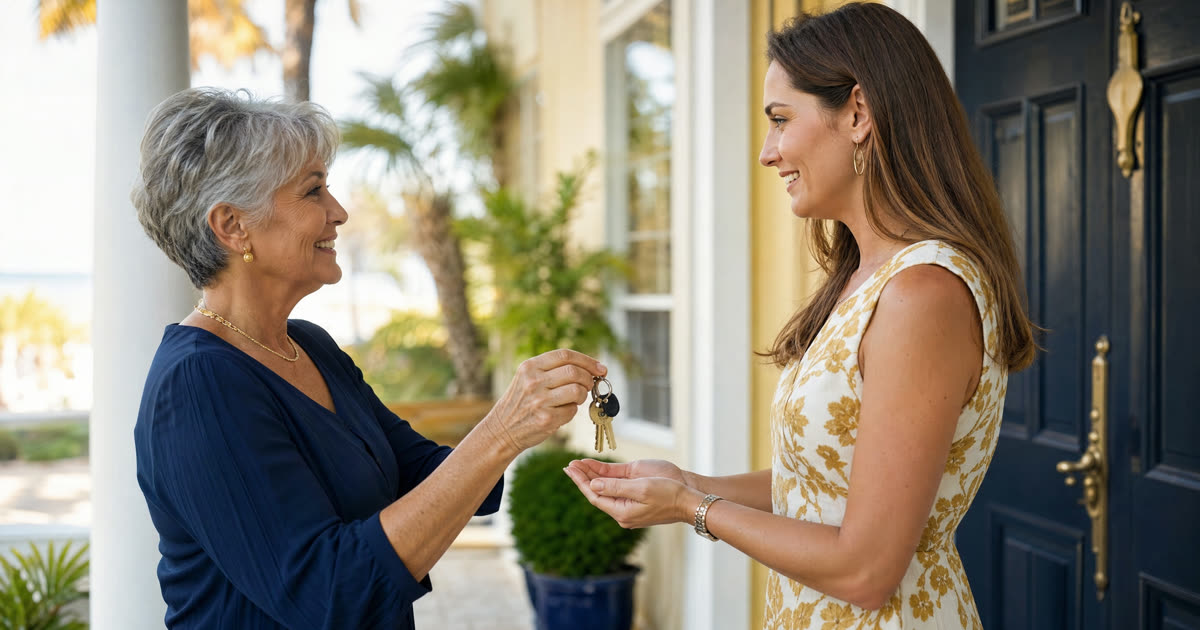
Meet Ruth: A Common Port Orange Story
Ruth is 79 and lives in Port Orange. She's a composite based on the kinds of clients I've worked with over the years, not an actual client, but her situation is one I see often. She bought her home in 1994 and has held her homestead exemption ever since. Because of Florida's Save Our Homes cap, her taxable assessed value has grown far more slowly than her home's actual market value. Her neighbors who bought recently are often paying several times what she pays, for a similar house.
Ruth is considering a lady bird deed (also called an enhanced life estate deed) to leave the house to her daughter without probate. As a quick refresher: Ruth keeps full control of the property for the rest of her life, including the right to sell it, mortgage it, or change her mind entirely, and the house passes to her named beneficiary automatically at her death. Her real question is simpler than the legal mechanics: will signing this deed mess with her tax bill?
Have this exact situation? Talk it through with a Florida attorney — the 20-minute consultation is free.
Book Free Consult or call (888) 388-8445At Signing: Nothing Changes
This is the part that puts most Florida homeowners at ease. A lady bird deed does not transfer present ownership to anyone. Ruth still owns the home outright, in every legal and practical sense, the moment after she signs as she did the moment before. Because there's no change of ownership for property tax purposes, the deed doesn't trigger a reassessment.
- Ruth keeps her existing homestead exemption.
- Her Save Our Homes assessment cap stays exactly where it was.
- The county property appraiser has no reason to touch her tax record because of the deed alone.
This is one of the real advantages of a properly drafted lady bird deed over some other transfer methods. It's worth noting there is no Florida statute that creates the lady bird deed itself. It rests on long-standing Florida title practice and title standards, not a specific code section, which is exactly why the drafting has to be precise. A deed that's missing the enhanced life estate language, and instead reads like an ordinary life estate deed, can be treated differently and may create tax or homestead complications during the owner's life. That's not a risk worth taking to save a little on preparation.
During Life: The Cap Keeps Working for Ruth
Nothing changes in year two, year ten, or any year Ruth continues living in and owning her home. She keeps filing (or simply keeps holding) her homestead exemption as she always has. Her assessed value keeps rising under the Save Our Homes limit rather than jumping to full market value. If Ruth ever wants to sell the home outright, or decides to revoke the deed and name a different beneficiary, she can. None of that is restricted by having the deed on file. The deed simply sits recorded in the county land records, waiting to do its job at her death, and doing nothing to her tax bill in the meantime.
At Ruth's Death: What Happens to the Assessment
This is where the tax picture actually shifts, and it's worth understanding clearly rather than fearing. When Ruth passes away, ownership transfers to her named beneficiary by operation of the deed, without probate. But a transfer of ownership, even a smooth and immediate one, is generally what triggers a fresh look at the property's assessed value.
In most cases, once the new owner isn't the deceased's spouse, the Save Our Homes cap and Ruth's homestead exemption end with her. The home's assessment can reset toward current just value, which for a house held since 1994 could mean a meaningfully higher tax bill going forward.
There is a narrower exception worth knowing about. If, at the time of the owner's death, a beneficiary was already living in the home as their permanent residence and was legally or naturally dependent on the owner, the capped assessment can sometimes carry forward for that person. This is a fact-specific rule, and whether it applies depends on the actual living and dependency arrangement at the moment of death, not on the deed itself.
The Beneficiary Child Moves In: Filing for Homestead
Say Ruth's daughter inherits the home and decides to move in and make it her own permanent residence. She won't inherit her mother's old capped assessment automatically just because she's family. What she can do is apply for her own homestead exemption on the property.
- She generally needs to establish the home as her permanent residence and file with the county property appraiser by March 1 of the year following the transfer.
- Once approved, she gets her own homestead exemption going forward, which reduces her taxable value and caps future annual increases under Save Our Homes, but starting from the home's current just value, not her mother's 1994 baseline.
- If Ruth's daughter is selling her own prior homestead elsewhere in Florida around the same time, she may be able to bring some of her own accumulated Save Our Homes benefit with her through portability, reducing the new assessment further. Portability is tied to the beneficiary's own prior homestead, not to the parent's old exemption.
In other words, the daughter isn't stuck with the full jump to market value forever, but she starts her own tax history rather than inheriting Ruth's.
Frequently Asked Questions
The Truestead Takeaway
For a homeowner like Ruth, the lady bird deed does exactly what it's supposed to do on the tax side: it changes nothing while she's alive. Her homestead exemption and her Save Our Homes cap stay fully intact from the day she signs until the day she passes away, because she never gives up ownership during her life. The real tax event happens at her death, when her beneficiary inherits the home and generally needs to file their own homestead application, by the March 1 deadline in the following year, to get exemption protection going forward, understanding that the assessment will likely reset toward current value unless a narrow dependency exception applies. None of this is a reason to avoid a lady bird deed, since probate avoidance and control during life remain real benefits, but it is a reason to plan with clear eyes about what the beneficiary's tax bill may look like. Every family's homestead history and beneficiary situation is different, so it's worth having your specific deed and tax picture reviewed by a Florida attorney. Truestead prepares Florida lady bird deeds for $199 self-guided or $399 attorney-prepared, including recording.
Have a child turning 18? Get the free 18 & Protected packet — the legal documents every Florida 18-year-old needs.
Get the Free PacketGet Your Florida Lady Bird Deed
Truestead prepares Florida Lady Bird (enhanced life estate) deeds: $199 self-guided from your answers, or $399 attorney-prepared and recorded for you, with the homestead and documentary-stamp guardrails the form sites skip.
Start Your Lady Bird Deed →This article is for general informational purposes only and does not constitute legal advice, nor does reading it create an attorney-client relationship. Florida estate, elder, probate, and real estate law are fact-specific and change over time. Consult a licensed Florida attorney about your individual circumstances. Arthur Simpson, Esq. is licensed to practice law in the State of Florida. Attorney advertising.
Talk to a Florida Attorney — Free 20-Minute Consultation
Pick a time below. No obligation, no pressure — just answers.