
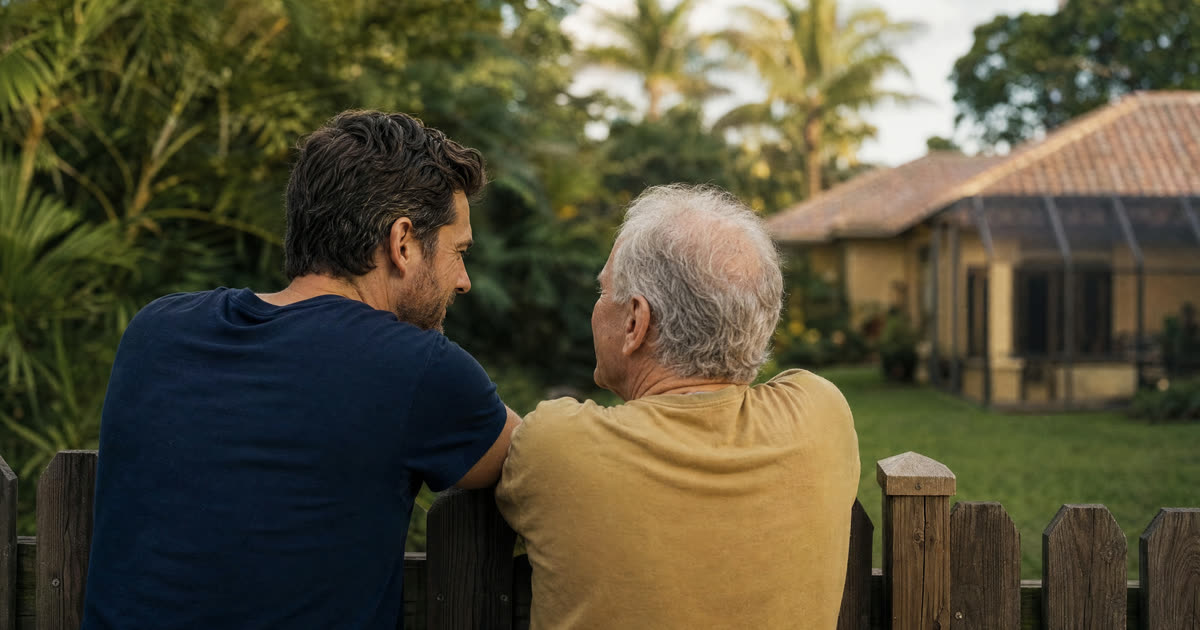
Yolanda's project: getting her mother's deed right the first time
Yolanda is 62, lives in Kendall, and has spent the last month researching how to put her mother's house into a lady bird deed so it passes to Yolanda and her brother without probate. She is the kind of person who reads the instructions before assembling the bookshelf, and she wants to know exactly what has to appear on this document before she brings it to her mother to sign. Yolanda is a composite of the many adult children Truestead works with, not an actual client, but her question is the one we hear constantly: what actually has to be on the page for this thing to hold up?
A quick refresher, since Truestead covers the basics elsewhere: a lady bird deed lets Yolanda's mother keep full control of her home for life, including the right to sell it, mortgage it, or change her mind entirely, while naming who inherits the property automatically at her death, outside of probate. This article stays narrowly on the mechanics: what language, whose signatures, and what recording steps make that deed enforceable.
Have this exact situation? Talk it through with a Florida attorney — the 20-minute consultation is free.
Book Free Consult or call (888) 388-8445The legal description, not the street address
This is where Yolanda almost went wrong. She assumed writing her mother's street address on the deed would be enough. It is not. Florida deeds require the full legal description of the property, the lot and block, metes and bounds, or condominium unit description that appears on the county's official records, not just the mailing address.
The safest source for this language is the deed by which Yolanda's mother currently holds title. Truestead pulls the legal description directly from that prior recorded deed or from the county property appraiser's records, then copies it precisely, including any easements or exceptions listed. A single dropped digit in a lot number or an incorrectly copied metes-and-bounds call can create a defective deed that a title company will flag years later, often when the family is trying to sell or refinance.
The language that makes it a lady bird deed and not just a life estate
Florida has no statute that creates the lady bird deed by name. It is not codified anywhere; it rests on longstanding Florida common law, title industry practice, and acceptance by title insurers. That means there is no official state form, and the deed's effectiveness depends entirely on how it is drafted. The document needs to do three things clearly:
- Name the grantor (Yolanda's mother) and convey the property to herself for life, creating a traditional-looking life estate
- Expressly reserve broad powers to the life tenant, typically the right to sell, mortgage, lease, or otherwise dispose of the property during her lifetime without needing the remainder beneficiaries' consent, and the right to revoke or change the remainder designation
- Name the remainder beneficiaries (here, Yolanda and her brother) who receive the property automatically at the life tenant's death
It is this reserved-powers language, distinguishing it from an ordinary life estate deed, that makes the arrangement work the way families expect: full control now, automatic transfer later. If that language is vague or missing, a title company may treat it as a standard life estate instead, which limits the owner's ability to sell or mortgage the home without the remainder beneficiaries joining in.
Two witnesses, a notary, and the address rule that trips people up
Florida law requires two subscribing witnesses for a deed conveying real property, in addition to a notary's acknowledgment. Both witnesses must be present when the grantor signs (or appear via approved audio-video technology, discussed below), and their signatures must be accompanied by their printed or typed names directly beneath the signature line.
Since a 2024 change to Florida's recording statute, each witness must also have their post office address printed, stamped, or typed on the deed beneath their name. This addition was meant to help curb property and deed fraud, but in practice it has become one of the most common reasons county clerks reject deeds for recording. Yolanda's checklist, then, looks like this:
- Grantor's signature, matching the name on the deed exactly
- Two witnesses' signatures, each with printed name and address
- A notary's signature, seal, and proper acknowledgment certificate
- The grantee's (beneficiary's) mailing address, which Florida recording law requires be listed on the face of the deed
Can the witnesses or notary appear remotely?
Yes. Florida permits remote online notarization, and witnesses may also participate remotely through approved audio-video communication technology rather than being physically present in the room. This can matter for a family like Yolanda's if her mother is out of state for the winter, or if a witness cannot travel. The technology has to meet Florida's specific requirements for online notarization, so this is not simply a video call: it involves an approved online notary platform with identity verification and a recorded session. Once properly executed and recorded, a deed signed this way cannot later be challenged solely on the basis that the witnessing or notarization happened remotely.
Recording it in the right county, and what happens if you don't
A lady bird deed does nothing until it is recorded in the county where the property is located. For Yolanda's mother's home in Kendall, that means the Miami-Dade County Clerk of Courts, not any other county, and not simply keeping the signed original in a drawer. Recording places the deed into the county's official records, indexed under the grantor's and grantee's names, so that title searchers, future buyers, and title insurers can find it.
An unrecorded deed can still be valid between the parties who signed it, but it offers no protection against later claims, and Florida title standards generally treat lady bird deeds as needing to be recorded before the grantor's death to reliably avoid probate. Recording fees are calculated per page and per name, and because a lady bird deed conveying a homestead to family members typically involves no consideration, it generally does not trigger documentary stamp tax the way a sale would.
If a defect turns up after recording, such as a legal description error or a missing witness address, Florida practice generally calls for either a corrective deed, referencing and fixing the original, or a scrivener's affidavit for minor clerical issues. It is not something to patch informally; a defective deed in the chain of title can complicate a future sale or refinance for the very people it was meant to help. This is the kind of correction Truestead handles regularly, and it is far easier to get the deed right the first time. Truestead prepares Florida lady bird deeds for a flat 199 dollars self-guided or 399 dollars attorney-prepared, including recording.
Frequently Asked Questions
The Truestead Takeaway
Yolanda's instinct to get every detail right was the correct one: a lady bird deed lives or dies on its details, since there is no Florida statute spelling out a required form. The legal description has to be copied precisely, the reserved powers language has to be clear enough that a title company recognizes it as a lady bird deed rather than a plain life estate, two witnesses need printed names and addresses, a notary has to properly acknowledge the signature, and the deed has to be recorded in the right county before it can do its job. If Yolanda's mother is married, her spouse's signature would also be required because of Florida's homestead protections. None of this is difficult once it is laid out, but small omissions, like a missing witness address, are exactly what cause deeds to bounce back from the clerk's office or cause title problems years later. Anyone preparing this kind of deed for a parent should have it reviewed by a Florida attorney familiar with lady bird deeds before it is signed and recorded.
Have a child turning 18? Get the free 18 & Protected packet — the legal documents every Florida 18-year-old needs.
Get the Free PacketGet Your Florida Lady Bird Deed
Truestead prepares Florida Lady Bird (enhanced life estate) deeds: $199 self-guided from your answers, or $399 attorney-prepared and recorded for you, with the homestead and documentary-stamp guardrails the form sites skip.
Start Your Lady Bird Deed →This article is for general informational purposes only and does not constitute legal advice, nor does reading it create an attorney-client relationship. Florida estate, elder, probate, and real estate law are fact-specific and change over time. Consult a licensed Florida attorney about your individual circumstances. Arthur Simpson, Esq. is licensed to practice law in the State of Florida. Attorney advertising.
Talk to a Florida Attorney — Free 20-Minute Consultation
Pick a time below. No obligation, no pressure — just answers.