
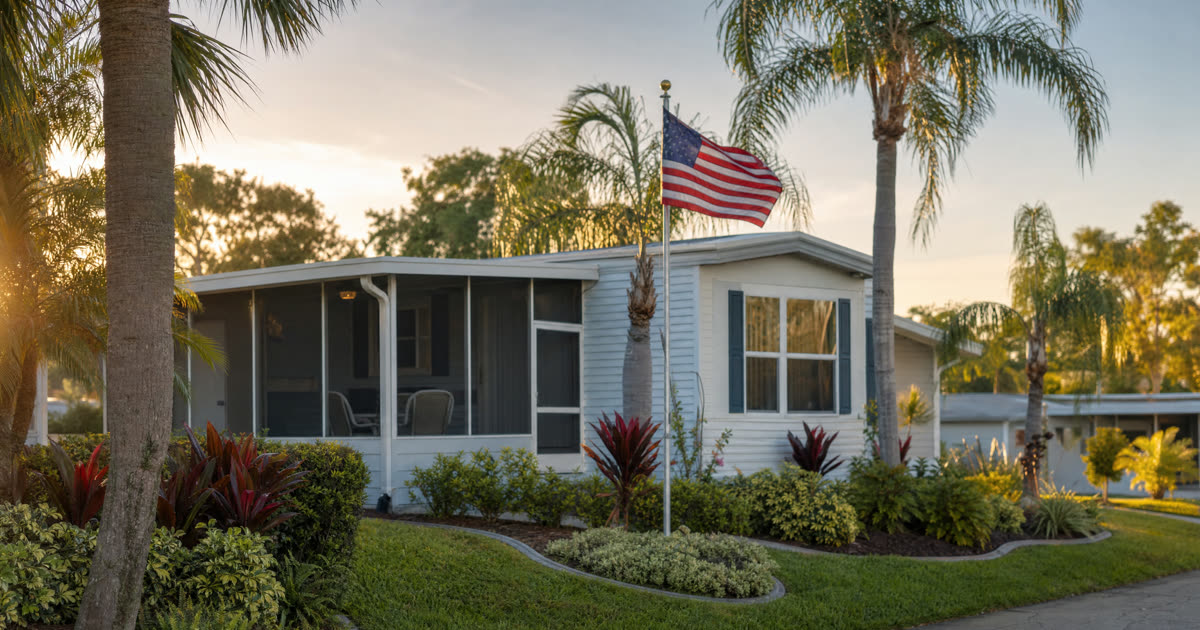
Scene One: The Week After the Funeral
The Morales siblings buried their father on a Tuesday. By Thursday they were standing in his living room, and it was already clear that grief was not the only thing they had in common now. Sanford, the middle child, wanted to move in. He had rented an apartment two miles away for eleven years and the house felt like the obvious next chapter. His older sister needed cash, plain and simple, to cover a medical bill and put a dent in her own mortgage. Their younger brother lived in Ohio and had no interest in the property beyond wanting his share wired to him.
Their father had done one smart thing: he signed a Florida lady bird deed years earlier, naming all three children as beneficiaries. As a quick refresher, that kind of deed let him keep full control of the house for the rest of his life, including the right to sell it or change his mind, and it passed the property directly to his children at his death without a trip through probate court.
What it did not do, because the deed did not say otherwise, was tell his children what to do with the house once they had it. The moment he died, Sanford and his siblings became tenants in common, each owning an equal, undivided one-third share of the whole property. No court order was needed to make that happen. That is simply Florida's default rule when a deed names more than one beneficiary without specifying otherwise.
Have this exact situation? Talk it through with a Florida attorney — the 20-minute consultation is free.
Book Free Consult or call (888) 388-8445Tenants in Common: What That Actually Means
Tenancy in common sounds technical, but the practical effect is straightforward. Each sibling owns a fractional interest in the entire house, not a specific room or a marked-off third of the yard. None of them can sell the whole property alone. None of them can be forced to buy the others out just because two siblings agree and one does not. And critically, any one of them can eventually ask a court to force a resolution, whether or not the other two are ready.
- Each owner may occupy, rent, or use the whole property, subject to the others' equal rights.
- Each owner may sell or mortgage only their own fractional share, which is rarely attractive to an outside buyer.
- Property taxes, insurance, and upkeep are shared obligations, and disputes over who is paying what are common.
- If the deed listed unequal percentages (say, half to one child and a quarter to each of the others), those percentages control instead of an automatic equal split.
For the Morales siblings, this meant Sanford could not simply move in and call the house his. His sister could not force a sale on her timeline alone. They were locked together as co-owners until they agreed on something, or until a court stepped in.
Scene Two: The Buyout Conversation
A few weeks in, the siblings tried to work it out themselves. The idea was simple: Sanford would buy out his sister and brother's two-thirds interest, keep the house, and everyone would walk away even. In practice, this required answering three hard questions.
First, what is the house actually worth? The siblings needed an independent appraisal, since Sanford's guess and his sister's guess were, unsurprisingly, a good distance apart. Second, how would Sanford pay for it? A buyout usually means the staying sibling qualifies for a new mortgage sized to pay off the departing siblings' shares, or pays cash if available. Third, what happens to any existing debt on the house, and who covers closing costs and the cost of retitling the property in Sanford's name alone?
These conversations are where family goodwill either holds or breaks. Sanford's brother in Ohio was easy to deal with by phone and email. His sister was not. She felt the appraisal came in low. She wanted her third distributed faster than a new mortgage could realistically close. What started as a buyout negotiation started to feel, to Sanford, like a hostage negotiation.
Scene Three: The Partition Threat
When the buyout talks stalled, Sanford's sister's attorney sent a letter mentioning a partition action. This is the legal tool Florida gives any co-owner of real property who cannot get the other owners to agree. Under Florida's partition statute (Chapter 64, Florida Statutes), a co-owner can file suit asking the court to divide the property or, far more commonly with a single-family home, order it sold and the proceeds split according to each owner's share.
Partition actions are not fast, and they are not free. The court typically appoints someone to handle the sale, deducts costs and fees from the proceeds, and then divides what remains. Nobody gets to pick the buyer they like best, and nobody controls the timeline the way they would in a private sale. For a family already strained by disagreement, a partition filing usually ends any remaining goodwill, even after the case settles.
The Morales siblings eventually settled out of court: a revised appraisal, a slightly longer closing window for Sanford's new loan, and a side agreement crediting some of his years of unpaid help with their father's bills. It worked, but it cost months, a family mediator's fee, and some relationships that never fully recovered.
What the Deed Could Have Said Instead
None of this was a flaw in the lady bird deed itself. The deed did exactly what it was built to do: it moved the house to the next generation without probate. The friction came from what the deed left unsaid. A few alternate approaches, decided while their father was alive and able to sign documents, could have avoided the standoff entirely.
- Name one child, with an equalizing bequest to the others. Their father could have deeded the house to Sanford alone, then left cash, investments, or a life insurance benefit to the other two through his will or a trust, sized to roughly match the home's value. Sanford gets the house outright with no co-owners to negotiate with, and his siblings get an equivalent inheritance in a form they can actually use.
- Name a trust as the beneficiary instead of the children directly. A lady bird deed can name a revocable living trust as the remainder beneficiary. A single trustee, chosen by the parent in advance, then decides whether to sell, rent, or distribute the house according to instructions the parent wrote into the trust. This keeps the decision with one person accountable to written terms, rather than three equal owners each holding a veto.
- Spell out specific shares and a resolution mechanism. Even keeping all three children as beneficiaries, the deed or an accompanying document could specify unequal percentages, a required appraisal process, a timeline for a buyout offer, or a right of first refusal for a sibling who wants to stay in the house.
Any of these routes still avoids probate on the real estate, which is the core benefit of the lady bird deed. What changes is who has to agree, and how much room is left for three grieving siblings to fight it out themselves.
Frequently Asked Questions
The Truestead Takeaway
The Morales siblings are a composite example, not real clients, but the pattern is one I see often: a lady bird deed did its job of skipping probate, and the real disagreement showed up afterward, among the new co-owners. The deed did not fail; it simply never contained instructions for three different people with three different needs. If you are a parent naming more than one child on a lady bird deed, the sensible next step is to think through, on paper, what you actually want to happen if your kids do not agree, whether that means unequal shares, a trust as beneficiary, or leaving the house to one child with an offsetting gift to the others. A short conversation with a Florida attorney now can spare your children the kind of standoff Sanford and his siblings had to work their way through.
Have a child turning 18? Get the free 18 & Protected packet — the legal documents every Florida 18-year-old needs.
Get the Free PacketGet Your Florida Lady Bird Deed
Truestead prepares Florida Lady Bird (enhanced life estate) deeds: $199 self-guided from your answers, or $399 attorney-prepared and recorded for you, with the homestead and documentary-stamp guardrails the form sites skip.
Start Your Lady Bird Deed →This article is for general informational purposes only and does not constitute legal advice, nor does reading it create an attorney-client relationship. Florida estate, elder, probate, and real estate law are fact-specific and change over time. Consult a licensed Florida attorney about your individual circumstances. Arthur Simpson, Esq. is licensed to practice law in the State of Florida. Attorney advertising.
Talk to a Florida Attorney — Free 20-Minute Consultation
Pick a time below. No obligation, no pressure — just answers.